
Did Prophet Muhammad Copy the Quran? The Truth About Waraqah and Bahira
My beautiful brothers and sisters, and to every sincere truth-seeker visiting our page today: May peace and blessings be upon you all. It is a natural part of human curiosity to question history, to look deeply into the origins of faith, and to seek clarity where there is confusion. From time to time, an old misconception resurfaces on social media or in academic discussions, suggesting that ” the Holy Quran was not divine revelation, but was instead copied from earlier scriptures, pointing to two historical figures as the true teachers of Prophet Muhammad (peace and blessings be upon him): the Christian scholar Waraqah ibn Nawfal and the Syrian monk Bahira.”
When we look at these claims through the lens of authentic history, rigorous textual comparison, and pure logic, we find that they quickly dissolve. Far from being a copyist, the Holy Quran came as the ultimate criterion—the final corrective and protective authority over all past revelations. Let us take a gentle, step-by-step journey through history to look at the undeniable facts.
Part One: Who Was Waraqah ibn Nawfal?
Long before the light of the final revelation descended upon the cave of Hira, Waraqah ibn Nawfal was known in Makkah as a deep researcher and a sincere seeker of truth. Disgusted by the widespread idol worship and the superstitious myths of the pre-Islamic era of ignorance, Waraqah abandoned paganism completely. He dedicated his life to studying the ancient scriptures, learning to read and write in Hebrew and Aramaic, until he became one of the most knowledgeable authorities of his time regarding the books of the past prophets.
1. His Role with Lady Khadijah Before Prophethood
Waraqah ibn Nawfal was the cousin of our beloved Mother, Lady Khadijah (may Allah be pleased with her). Because of his vast wisdom, he served as a trusted intellectual guide for her. Waraqah would frequently mention to Khadijah that the time was approaching for a brand new prophet to rise among the Arab people.
By instilling this profound awareness, Waraqah played a beautiful, indirect role in preparing Lady Khadijah mentally and spiritually. She realized the unique, upright nature of the noble man she had married—Muhammad ibn Abdullah—years before his prophetic mission officially commenced.
2. The Fateful Moment of the First Revelation
Let us visualize that monumental moment in human history. The Prophet Muhammad (peace and blessings be upon him) came down from the Cave of Hira, trembling with overwhelming awe due to the majesty of the angel Gabriel _The Holy Spirit_ whom he had just encountered. He rushed into his home, his heart beating rapidly, saying to his beloved wife, “Cover me! Cover me!”
In this critical hour, Lady Khadijah was a pillar of unshakeable strength. She did not panic, she did not doubt his sanity, and she did not raise her voice. Instead, she comforted his fears with words of absolute certainty that are forever etched in history. As recorded in the authentic narrations of Sahih al-Bukhari, Hadith 3, she declared:
“Never! By Allah, Allah will never disgrace you. You keep good relations with your Kith and kin, serve the poor and the destitute, help the needy, entertain your guests generously, and assist those who are afflicted by calamities.”
To settle his heart using deep knowledge, she took him directly to her wise cousin, Waraqah ibn Nawfal. When the noble Prophet _PBUH_ described exactly what had happened in the cave, Waraqah did not say, “Let me teach you.” Instead, he cried out with absolute conviction:
Consider the profound reality of this meeting: Lady Khadijah provided the intuitive, loving emotional support, while Waraqah provided the verified scientific and historical testimony from the previous scriptures. Waraqah was a living witness confirming that the long-awaited prophecies were finally coming to life.
Waraqah then provided essential psychological preparation for the hardships to come, saying: “I wish I were young and could live up to the time when your people will turn you out.” The Prophet asked in surprise, “Anyone who came with something similar to what you have brought was treated with hostility.”
3. Waraqah Was a Witness, Never a Teacher
Waraqah ibn Nawfal passed away merely a few days after this initial event, during the very early days when the revelation temporarily paused. He died as a firm believer in the upcoming prophethood of Muhammad. In fact, according to the authentic reference on IslamQA.info, the Messenger of Allah (peace and blessings be upon him) saw a vision of Waraqah in a beautiful state, mentioning that he has been granted a garden or two in Paradise for his early faith.
💡 The Logical Refutation to the Waraqah Allegation:
- Waraqah was an elderly, blind, and fragile man who passed away at the very dawn of the prophetic mission.
- The revelation of the Holy Quran continued systematically for twenty-three long years after Waraqah’s death.
- The Quran detailed intricate state legislation, complex civil laws, military strategies, future prophecies, and deep matters of the unseen world that occurred long after Waraqah was buried.
- If Waraqah had been the author, the fierce enemies of Islam among the Quraysh—who were desperate to expose the Prophet—would have immediately pointed out his death to discredit the ongoing verses. Yet, they never used this argument because it was a geographical and chronological impossibility.
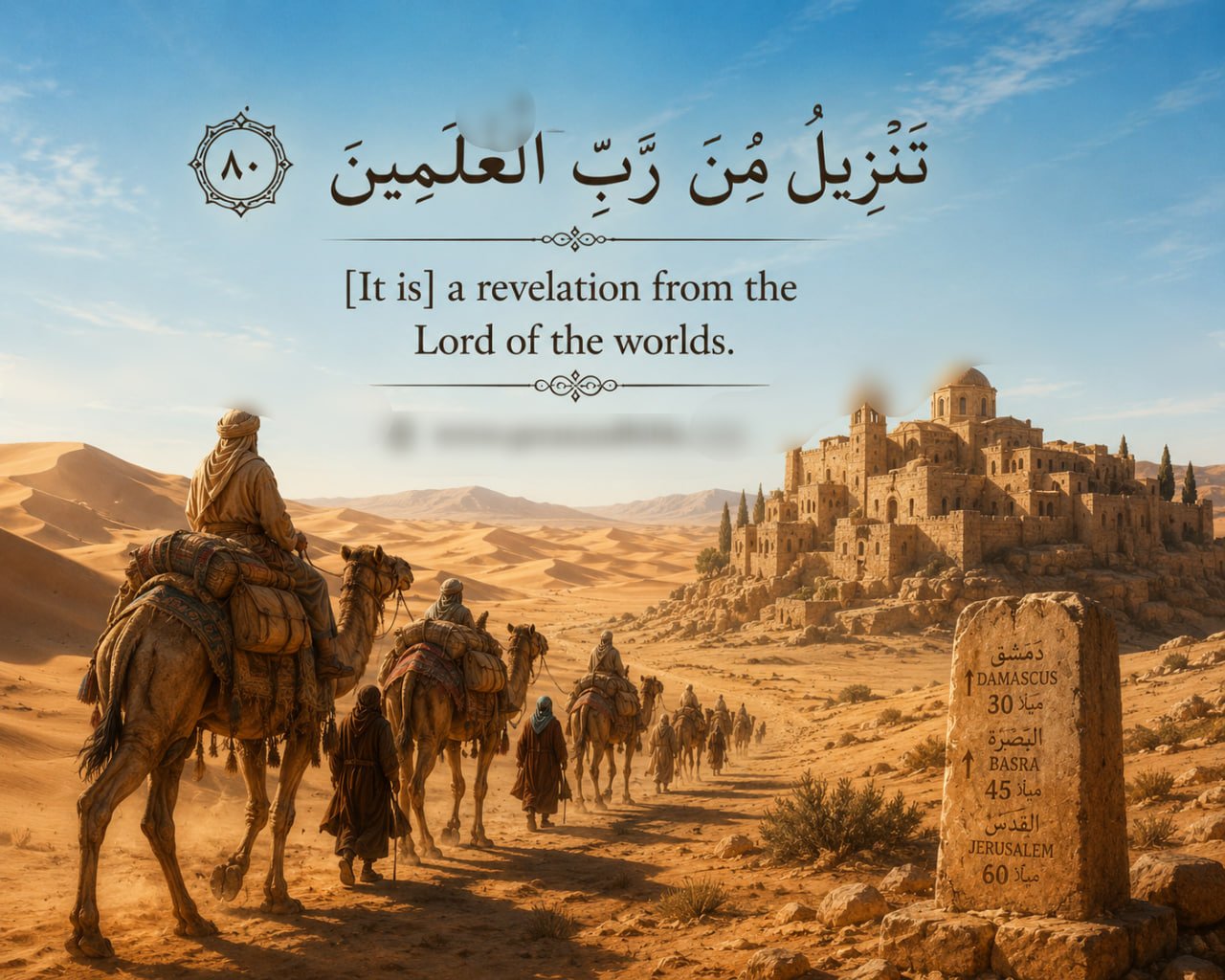
Part Two: The Brief Encounter with Bahira the Monk
The second line of criticism often attempts to connect the Quran to a Christian monk named Bahira, who lived in a secluded monastery in Bosra, Syria. According to the early biographical works documented by historians like Ibn Ishaq, this encounter occurred when the noble prophet Muhammad_ peace be upon him_ was a young boy of approximately twelve years old, traveling with his paternal uncle, Abu Talib, on a commercial trade caravan.
As the caravan drew near, Bahira noticed extraordinary, miraculous signs: a lone cloud consistently casting a shadow directly over the young boy to protect him from the fierce desert sun, and the branches of trees lowering themselves to offer him shade. Recognizing these supernatural markers from his old texts, Bahira invited the entire caravan to a banquet.
Upon examining the young child, Bahira discovered the physical Seal of Prophethood between his shoulders, matching the precise traits written in the ancient scriptures. Out of deep concern, Bahira urgently advised Abu Talib: “Take your nephew back to his homeland and guard him carefully against the detractors, for if they see him and know what I know about him, they will seek to harm him.”
The Complete Collapse of the Bahira Taught Theory
To claim that a single, brief, public encounter during childhood could enable a twelve-year-old boy to write the most linguistically complex book in human history is completely irrational. Consider these three historical facts:
- A Single Shared Meeting: The encounter lasted for only a few brief hours in the middle of a busy public feast attended by the entire trade caravan. There were no private lessons, no ongoing communications, and they never met again for the rest of their lives.
- A Gap of Thirty Years: The actual dynamic revelation of the Holy Quran did not begin until three decades later, when the Prophet reached forty years of age. A childhood lunch meeting does not translate into a massive theological system thirty years down the line.
- The Absolute Language Barrier: Bahira spoke and studied exclusively in Syriac and Greek text, whereas the Prophet Muhammad was unlettered and spoke only pure Arabic.
Part Three: The Quran as the Divine Corrective Authority
If the Holy Quran were copied from human hands, it would have mirrored the historical errors, theological alterations, and specific geographical perspectives found in the apocryphal texts of that era. Instead, the Quran arrived as a magnificent, independent corrective criterion over all previous human records.
Allah Almighty clarifies this elevated status beautifully in the Holy Quran, using the Saheeh International translation, in Surah Al-Ma’idah (5:48):
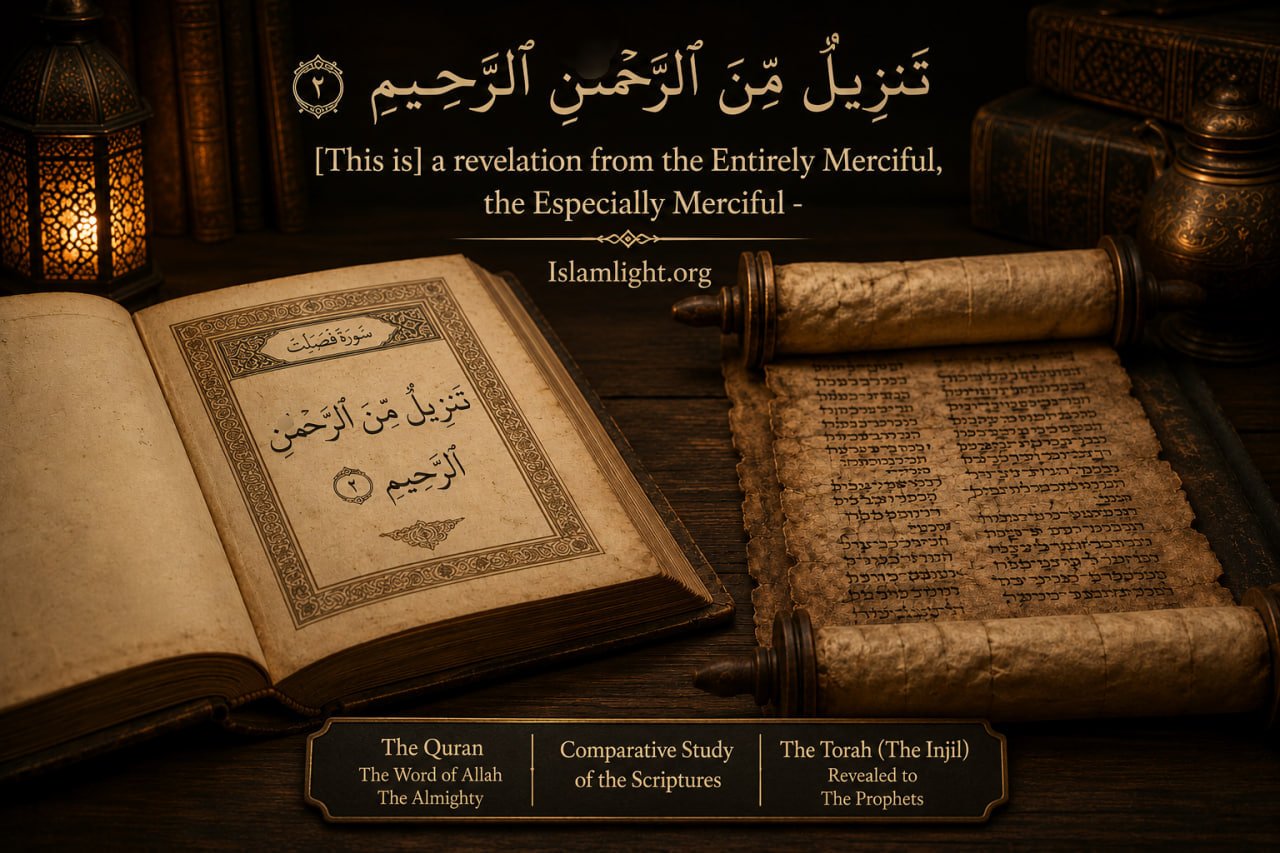
وَأَنزَلْنَا إِلَيْكَ الْكِتَابَ بِالْحَقِّ مُصَدِّقًا لِّمَا بَيْنَ يَدَيْهِ مِنَ الْكِتَابِ وَمُهَيْمِنًا عَلَيْهِ…
“And We have revealed to you, [O Muhammad], the Book in truth, confirming what preceded it of the scripture and as a criterion over it…”
The word used in this noble verse is Muhaimin, which means a dominant, overarching guardian, referee, and corrector. The Holy Quran actively corrects past theological innovations, purifies the histories of the ancient prophets from false allegations, and presents timeless truths with perfect clarity.
The Prophet Muhammad (peace and blessings be upon him) was explicitly chosen as an unlettered man—unable to read or write any human script—precisely so that no critic could ever accuse him of plagiarizing or studying human textbooks. This historical shield is highlighted in Surah Al-`Ankabut (29:48):
وَمَا كُنتَ تَتْلُو مِن قَبْلِهِ مِن كِتَابٍ وَلَا تَخُطُّهُ بِيَمِينِكَ ۖ إِذًا لَّارْتَابَ الْمُبْطِلُونَ
“And you did not recite before it any scripture, nor did you inscribe it with your right hand; otherwise the falsifiers would have doubted.”
A Final Welcoming Message to the Reader
Ultimately, the claim that the Holy Quran was learned from Waraqah ibn Nawfal or Bahira the monk is completely contradicted by the timeline of history, the barriers of language, and plain logic. These two men were not secret authors or trainers; they were simply early, insightful scholars of the past who recognized the clear signs of the final Prophet as soon as they saw him. The Quran remains an everlasting miracle, sent directly from the Lord of the worlds to guide humanity with light and mercy. May Allah open our hearts to pure truth, bless our journeys of learning, and guide us all to that which pleases Him.