
Islamic Monotheism vs. Idol Worship: A Compassionate Islamic Response (Qur’anic & Vedic Perspectives)
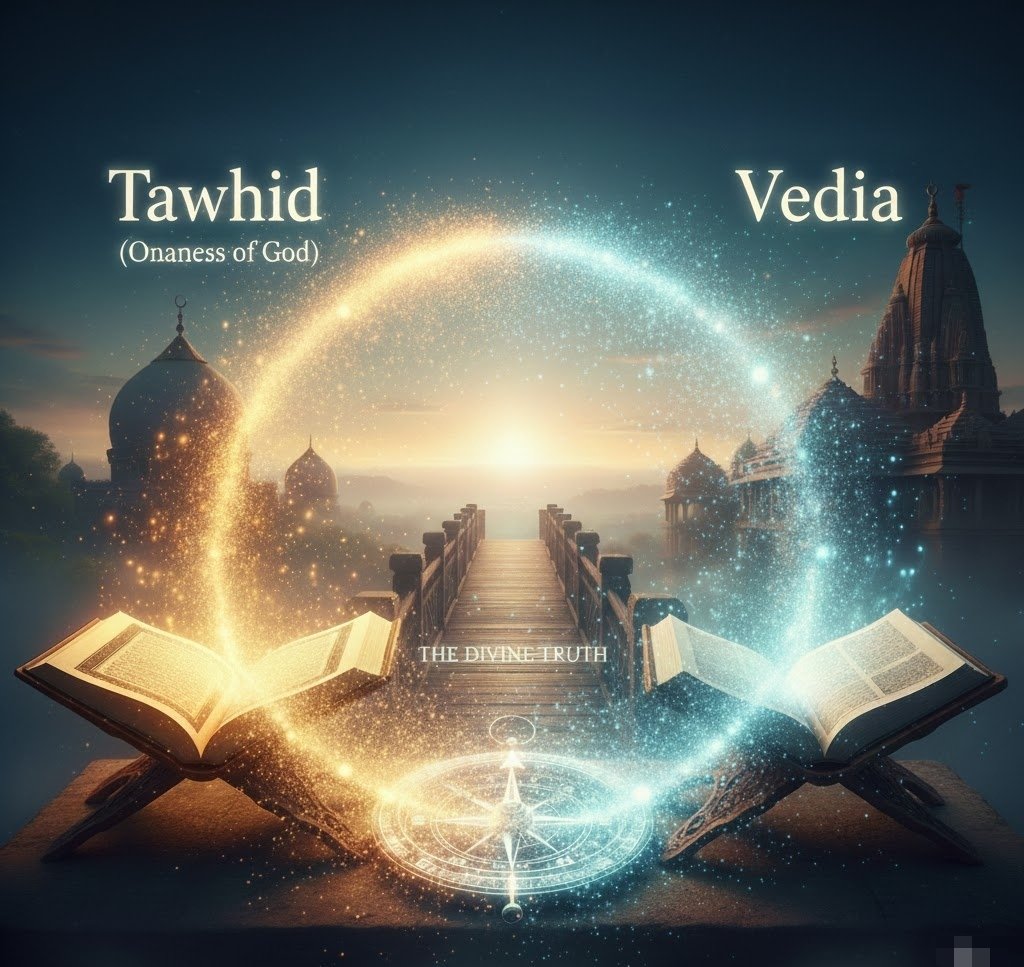
A respectful, evidence-based explanation of Tawḥīd (the Oneness of God) with Qur’anic verses, authentic Sunnah references, and contextual reading of selected Vedic statements.
In gentle words and with a clear mind, Islam invites every person to reflect on the Creator and the created. The Qur’an speaks directly to the heart of the matter: naming the One God in speech while associating partners in worship is a contradiction between claim and practice. This article aims to explain that truth with respect, using the Qur’an and authenticated Sunnah, and to invite seekers to honest reflection.
What the Qur’an Says About Idol Worship
“If you ask them who created the heavens and the earth, they will surely say, ‘Allah.’”
(Qur’an 39:38 — Sahih International)
The Qur’an highlights a striking paradox: people recognize the Creator by name when asked, yet many continue to take others as partners in devotion. This is not a mere academic point — the Qur’an explains that such actions contradict true reliance and gratitude toward the One Who provides.
(See Qur’an 29:17).
The Qur’an also reminds us that the many names and attributes we naturally ascribe to God are best understood as attributes of the One Divine Essence — not as proof of many deities.
(See Qur’an 2:163).
A Brief Look at the Vedas & Early Texts
The earliest Vedic layers often refer to the Divine with many names (Indra, Mitra, Varuna, Agni) while sometimes acknowledging a single ultimate Reality behind those names. Some modern developments led to pantheistic or polytheistic expressions — but even within the Vedas there are verses pointing to a single transcendent reality beyond creation.
Islam’s approach is to read both reason and revelation together: many attributes do not necessitate many essences. A sensible analogy: a person may be kind, wise, and strong — these qualities do not make three persons; they are facets of one person.
Why Pantheism or Multiple Deities Pose Problems
- Logical priority: If the Creator is identical with the created, how did the created universe come into being? Making the cause and effect identical leads to contradiction.
- Ethical tension: If everything is divine, the distinction between good and evil becomes unclear — undermining moral responsibility.
- Practical insecurity: The Qur’an warns that if there were other gods, the heavens and earth would be thrown into disorder — affirming unity as a condition for cosmic order.
(Qur’an 21:22)
Reincarnation, Samsāra, and the Qur’anic View of Life & Death
Many streams in modern Hindu thought teach soul transmigration (samsāra). Islam and the Qur’an present a clear alternative: life in this world is one stage, and resurrection follows. The Qur’an rejects the notion that the worldly cycle repeats eternally and points to final accountability.
(See Qur’an 36:31)
How to Invite with Kindness & Wisdom
When addressing beliefs different from ours, Islam prescribes wisdom, beautiful counsel, and respect. Use reason, textual evidence, and the language of the heart. Avoid ridicule; follow the prophetic example of gentleness. Remember that conviction is ultimately the work of Allah alone.
Quick tips:
- Listen first — genuine listening opens hearts.
- Use shared texts where possible (quote, then link).
- Pray for guidance — invite with a dua and a smile.
Qur’anic references (Sahih International):
Sunnah references (Sunnah.com):