
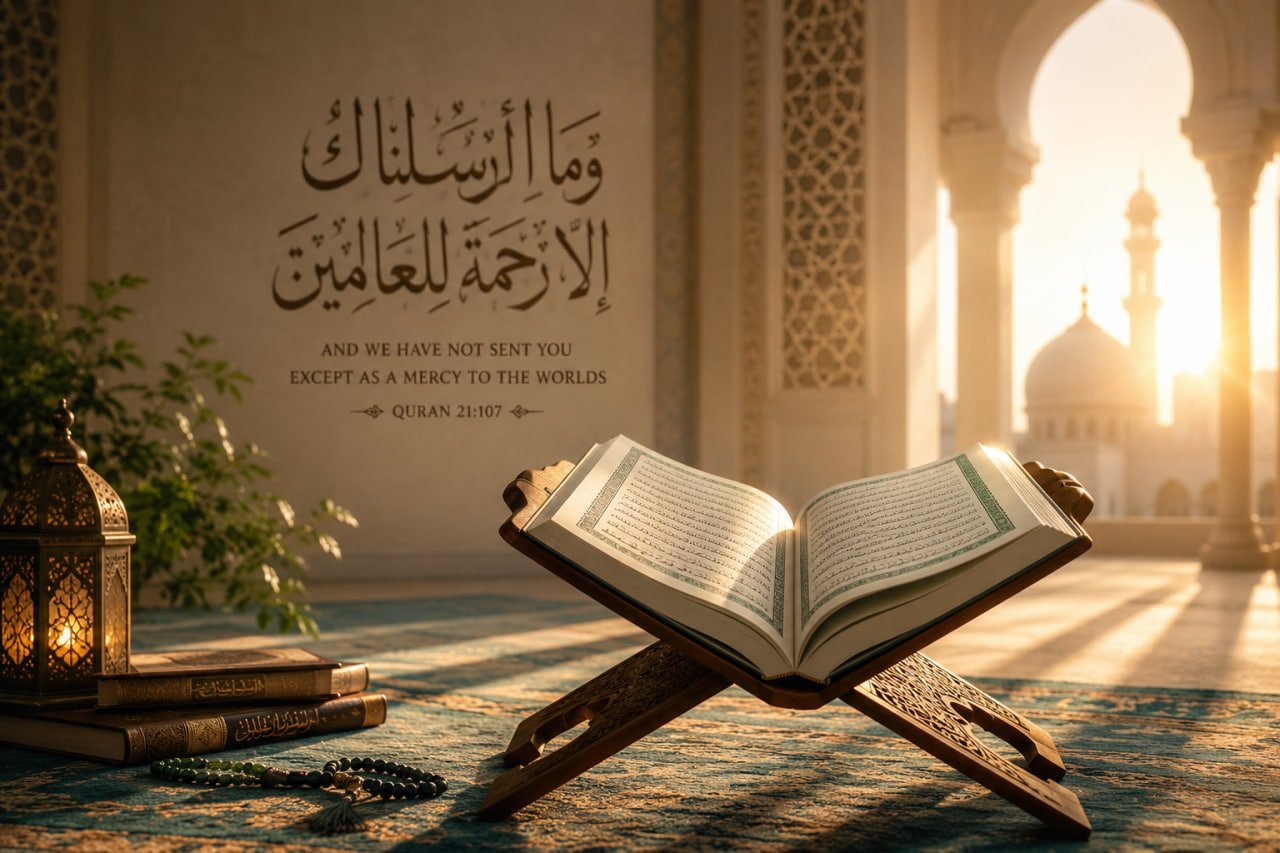

The Prophet’s Mercy ﷺ: Choosing Ease Without Compromising Allah’s Limits
A powerful exploration of the noble character of Prophet Muhammad ﷺ — his gentleness, forgiveness, wisdom, and unwavering commitment to truth through authentic Islamic sources.
وَٱلَّذِينَ ءَامَنُوا۟ وَعَمِلُوا۟ ٱلصَّـٰلِحَـٰتِ وَءَامَنُوا۟ بِمَا نُزِّلَ عَلَىٰ مُحَمَّدٍۢ وَهُوَ ٱلْحَقُّ مِن رَّبِّهِمْ ۙ كَفَّرَ عَنْهُمْ سَيِّـَٔاتِهِمْ وَأَصْلَحَ بَالَهُمْ ٢
And those who believe and do righteous deeds and believe in what has been sent down upon Muḥammad – and it is the truth from their Lord – He will remove from them their misdeeds and amend their condition.
The Beautiful Balance of the Prophet ﷺ
Many people today misunderstand kindness as weakness and firmness as harshness. Yet the life of Prophet Muhammad ﷺ beautifully combined both mercy and principle in perfect harmony.
He ﷺ was the most compassionate of people, the easiest to approach, and the gentlest in speech and behavior. He forgave personal wrongs, overlooked insults, and chose ease whenever possible. However, when the sacred limits of Allah were violated, his response became firm — not for personal ego, but purely for truth and justice.
This balance is one of the greatest signs of the perfection of Islam. It teaches humanity how to remain merciful without becoming morally weak, and principled without becoming oppressive.
Authentic Hadith About the Mercy of the Prophet ﷺ
ما خُيِّرَ النَّبيُّ صلَّى اللهُ عليه وسلَّم بينَ أمرَينِ إلَّا اختارَ أيسَرَهما ما لم يَأثَمْ، فإذا كان الإثمُ كان أبعَدَهما منه، واللهِ ما انتَقَمَ لنَفسِه في شيءٍ يُؤتى إليه قَطُّ، حتَّى تُنتَهَكَ حُرُماتُ اللهِ، فيَنتَقِمُ للَّهِ.
“Whenever the Prophet ﷺ was given the choice between two matters, he would choose the easier one as long as it was not sinful. But if it was sinful, he would be the furthest away from it. And the Messenger of Allah ﷺ never took revenge for himself, unless the sacred limits of Allah were violated, in which case he would act for the sake of Allah.”
Source:
Sahih al-Bukhari 6786
Also narrated in:
Sahih Muslim 2327
Choosing Ease — But Never Sin
Islam is not a religion of unnecessary hardship. Prophet Muhammad ﷺ consistently chose the easier option whenever both choices were permissible. This reflects the mercy of Allah toward humanity.
However, this ease never came at the expense of truth, morality, or obedience to Allah. Modern society often confuses “ease” with abandoning principles. The Prophet ﷺ showed that true mercy does not mean accepting sin or compromising revelation.
Qur’anic Foundation
“So by mercy from Allah, [O Muhammad], you were lenient with them. And if you had been rude [in speech] and harsh in heart, they would have disbanded from about you.”
— Qur’an 3:159 (Sahih International)
This verse beautifully demonstrates how gentleness attracts hearts, while harshness pushes people away from truth.
He Never Took Revenge for Himself
One of the most astonishing aspects of the Prophet’s character ﷺ was his refusal to seek personal revenge.
He was insulted, mocked, physically harmed, and falsely accused just as all the prophets and messengers before him were tested with — yet he remained patient and forgiving. His mission was not driven by ego, pride, or personal status. Instead, it was driven by sincere concern for humanity.
This teaches Muslims a timeless lesson:
- Not every insult deserves retaliation.
- Strength is often found in restraint.
- Forgiveness can transform hearts.
- True leadership is rooted in mercy.
When the Prophet ﷺ Became Angry
Although he was merciful and forgiving, the Prophet ﷺ did become angry — but only for the sake of Allah.
His anger was never emotional instability or uncontrolled rage. Rather, it was principled concern when Allah’s commandments were openly violated or when injustice spread among people.
This teaches a crucial Islamic principle:
Mercy does not mean moral compromise.
A Muslim should be gentle with people, patient with mistakes, and compassionate toward sinners while avoiding gatherings of sins — while still loving truth and respecting the limits set by Allah.
Practical Lessons for Modern Life
- Choose gentleness in speech.
People are more likely to listen when approached with wisdom and kindness. - Do not make religion unnecessarily difficult.
Islam encourages balance, practicality, and compassion in moderation. - Control personal anger.
Many conflicts are fueled by ego rather than sincere concern for truth. - Stand for truth respectfully.
Mercy and principles should work together — not against each other.
Allah the Almighty says:“…And cooperate in righteousness and piety, but do not cooperate in sin and aggression. And fear Allāh; indeed, Allāh is severe in penalty.” - Reflect the Sunnah in daily life.
The Prophet ﷺ was sent as a mercy to humanity. Prophet Mohammed ,may God bless him and grant him peace, did passed away but Allah (Almighty God ) has left us the Qur’an and the Sunnah of His Messenger, so that we may return to them when needed, and he has instructed us to learn and teach them to those after us.
“Indeed, it is We who sent down the Qur’an and indeed, We will be its guardian.” [Al-Hijr: 9].Praise be to Allah, we still have Quran and Sunnah in our hands and the contents of his message are still known to scholars in the Shari’a law.
“Say, “This is my way; I invite to Allah with insight, I and those who follow me.” [Yusuf: 108].
The Prophet peace and blessings be upon him said, “Convey (my teachings) to the people even if it were a single sentence”
So learning this message and adhering to it is an infallibility for us from misguidance.
Messenger of Allah, may Allah bless him and grant him peace, said, “I have left two matters with you. As long as you hold to them, you will not go the wrong way. They are the Book of Allah and the Sunna of His Prophet.”
Further Authentic Islamic Reading
For deeper understanding regarding the Prophet’s mercy, wisdom, gentleness, and balanced approach in Islam, refer to the following authentic scholarly resource:
Final Reflection
The life of Prophet Muhammad ﷺ remains one of the greatest examples of balanced character in human history.
He combined mercy with justice, gentleness with strength, forgiveness with principle, and ease with obedience to Allah.
In a world filled with anger, division, and extremes, the Sunnah of the Prophet ﷺ offers a timeless path of wisdom, compassion, and moral clarity.
“Indeed in the Messenger of Allah you have an excellent example.”
— Qur’an 33:21
In Conclusion
“In this is guidance for Muslims to base their way of life upon ease, tolerance, and avoiding exaggerated strictness, while strictly respecting the sacred ordinances and limits of Allah; thus, sins and misdeeds are not committed, and the rights of Allah are not violated within the Muslim society. Should that occur, it becomes incumbent upon the Muslim to feel anger for the sake of Allah, following the example of the Prophet (peace and blessings of Allah be upon him), while ensuring that matters are kept in their proper perspective, and that this anger is justified and does not exceed its proper bounds, lest he causes corruption where he intended to bring about reform.”
References