
How Many Major Signs of the Day of Judgment Have Appeared So Far? What Does Islam Really Tell Us?
A journey through authentic Islamic teachings about the approaching Hour, the great signs, and the importance of preparing our hearts before it is too late.
Islamic Belief | Signs of the Hour | Quran and Authentic Sunnah
Table of Contents
- Introduction: A Question That Deserves Our Attention
- Understanding the Signs of the Hour
- Minor Signs and Major Signs
- The Ten Major Signs in Authentic Hadith
- The Appearance of Al-Masih Ad-Dajjal
- The Return of Prophet Isa (Jesus)
- The Emergence of Ya’juj and Ma’juj
- The Smoke
- The Beast of the Earth
- The Rising of the Sun from the West
- The Three Great Landslides
- The Fire That Will Gather Humanity
- The Mahdi and His Place Among the Signs
- Have Any Major Signs Appeared Yet?
- Why We Must Avoid Misinterpreting Current Events
- What Does the Quran Teach Us About the Hour?
- How Should We Prepare for the Last Day?
- Conclusion: The Question Is More Personal Than We Think
- Frequently Asked Questions
Introduction: A Question That Deserves Our Attention
Have you ever looked at the world around you and wondered whether the Day of Judgment is approaching? Have you noticed the wars, the suffering, the moral confusion, and the extraordinary changes taking place across the world and asked yourself: How many of the major signs of the Hour have already appeared?
It is a question that crosses the minds of many Muslims and truth-seekers. Sometimes, a video, a news report, or a conversation about the end times awakens a feeling that we should learn more about what Allah has revealed. Yet, alongside genuine curiosity, there is also a responsibility: we must distinguish authentic Islamic teachings from speculation, exaggerated claims, and interpretations that have no reliable foundation.
Islam does not teach us to approach the Last Day through frightening rumours or sensational predictions. Rather, it invites us to reflect, seek knowledge, recognize the truth, and prepare ourselves for the meeting with our Creator.
The Prophet Muhammad (peace and blessings be upon him) informed his Ummah about extraordinary events that would precede the Hour. Some are described as minor signs, while others are tremendous events that will occur near the end of worldly life.
In this article, we will explore the major signs through the Quran and authentic Prophetic narrations, using reliable Islamic references. We will also address an important question: have any of these extraordinary major signs actually occurred, or are people confusing them with ordinary events and earlier minor signs?
Our purpose is not to predict the Hour. Nobody possesses that knowledge except Allah. Our purpose is to understand what has been authentically reported and allow that knowledge to encourage sincere faith and righteous action.
Understanding the Signs of the Hour
The Arabic expression Ashraat al-Saa’ah refers to the signs or indications of the Hour. These are events that Allah has made signs preceding the Day of Resurrection. They remind humanity that worldly life is temporary and that every person will eventually return to their Lord.
The Hour itself refers to the great Day when Allah will resurrect humanity, gather creation, and establish perfect justice. Every soul will be accountable for what it earned, whether openly or privately, whether people witnessed its actions or never knew about them.
Allah says in the Quran:
“They ask you about the Hour: when is its arrival? Say, ‘Its knowledge is only with my Lord. None will reveal its time except Him…'”
Surah Al-A’raf (7:187) – Saheeh International
This verse establishes an essential principle: knowing the exact time of the Hour is not within human knowledge. Even the Messenger of Allah (peace and blessings be upon him) did not possess independent knowledge of its appointed time.
Therefore, studying its signs should increase our awareness of Allah, not encourage us to calculate dates or make unsupported predictions.
Minor Signs and Major Signs: What Is the Difference?
Islamic scholars generally divide the signs of the Hour into two broad categories: minor signs and major signs.
Minor Signs of the Hour
Minor signs are events that may occur long before the final approach of the Hour. Some have already occurred, some continue to appear, and others may occur in the future. Examples discussed in authentic narrations and scholarly explanations include the spread of ignorance, the disappearance of religious knowledge, the widespread prevalence of certain sins, and competition in constructing tall buildings.
These signs are not necessarily extraordinary supernatural events. Some describe developments in human behaviour, society, and religious life. Their occurrence should encourage reflection rather than lead people to declare that the Day of Judgment is immediately upon them.
Major Signs of the Hour
Major signs are extraordinary events that will occur near the end of worldly life. Their descriptions in the authentic Sunnah distinguish them from ordinary historical events, natural disasters, political conflicts, and social changes.
One of the most important narrations concerning these signs is reported in Sahih Muslim. Hudhayfah ibn Usayd al-Ghifari (may Allah be pleased with him) narrated that the Messenger of Allah (peace and blessings be upon him) mentioned ten signs that would occur before the Hour.
The narration includes the Dajjal, the smoke, the Beast, the rising of the sun from the west, the descent of Jesus son of Mary, the emergence of Gog and Magog, three major landslides, and a fire that will drive people towards their gathering place.
Primary reference: Sahih Muslim 2901a – The Ten Signs.
The Ten Major Signs in Authentic Prophetic Hadith
The narration in Sahih Muslim provides one of the clearest foundations for understanding the major signs. It is important to study these events individually rather than combine unrelated stories, rumours, or modern interpretations and present them as established Islamic facts.
The ten signs mentioned in the narration are:
- The appearance of Al-Masih Ad-Dajjal.
- The descent of Prophet Isa ibn Maryam (Jesus, son of Mary).
- The emergence of Ya’juj and Ma’juj (Gog and Magog).
- The appearance of the smoke.
- The emergence of the Beast of the Earth.
- The rising of the sun from the west.
- A great landslide in the east.
- A great landslide in the west.
- A great landslide in the Arabian Peninsula.
- A fire emerging from Yemen that will drive people towards their gathering place.
The hadith is a foundational reference, although different narrations mention these signs in different sequences. We should not assume that the order in which a narrator lists them necessarily establishes the exact chronological order of every event.
1. The Appearance of Al-Masih Ad-Dajjal: The Greatest Trial
Among the most frightening events described in the authentic Sunnah is the appearance of Al-Masih Ad-Dajjal, commonly referred to as the False Messiah or the Antichrist.
His emergence will represent an immense trial for humanity. The Prophet Muhammad (peace and blessings be upon him) described his characteristics and warned his Ummah against the deception he would bring.
According to authentic narrations, the Dajjal will be a human being, and Allah will permit him extraordinary abilities that will test people’s faith. He will deceive many through apparent wonders and claims that will challenge their understanding of truth.
However, Muslims must remember that extraordinary appearances do not establish divinity. Allah is far above every imperfection, and no created being can possess the attributes of the Creator.
The Prophet (peace and blessings be upon him) also taught his followers to seek Allah’s protection against the Dajjal’s trial.
Authentic Hadith: The Prophet instructed Muslims to seek refuge in Allah from the punishment of Hell, the punishment of the grave, the trials of life and death, and the trial of Al-Masih Ad-Dajjal.
Another important protection is learning and memorizing the first ten verses of Surah Al-Kahf. The Prophet (peace and blessings be upon him) taught that memorizing these verses provides protection from the Dajjal’s trial, by Allah’s permission.
Has the Dajjal appeared? According to the established descriptions in authentic Islamic sources, his promised appearance has not been confirmed in our time. Identifying political leaders, public figures, or contemporary individuals as the Dajjal without evidence is irresponsible and has no sound Islamic foundation.
2. The Descent of Prophet Isa (Jesus), Peace Be Upon Him
One of the most significant beliefs concerning the end times is the return of Prophet Isa ibn Maryam (peace be upon him). Islam honours Jesus as one of Allah’s noble Messengers, born miraculously to Maryam (Mary), without a father.
Muslims believe that Isa was not crucified or killed by his enemies. Rather, Allah raised him, and he will return to earth before the Day of Resurrection.
His return will occur during the great tribulation of the Dajjal. According to authentic narrations, Isa will descend and establish justice by Allah’s command. He will defeat the Dajjal, and his presence will mark a remarkable period in human history.
The Prophet Muhammad (peace and blessings be upon him) said that the son of Mary would descend as a just ruler.
Authentic reference: Sahih al-Bukhari 3448 and Sahih Muslim 155.
The Quran also addresses the reality of Jesus and his relationship to the coming Hour. Read the Saheeh International translation of Surah An-Nisa (4:157–159):
Read Surah An-Nisa, verses 157–159.
It is important not to confuse the Islamic belief in Jesus with the different theological understandings held by other religions. Islam affirms his prophethood and honour while maintaining the absolute oneness of Allah.
His future descent has not been established as an event that has already occurred.
3. The Emergence of Ya’juj and Ma’juj (Gog and Magog)
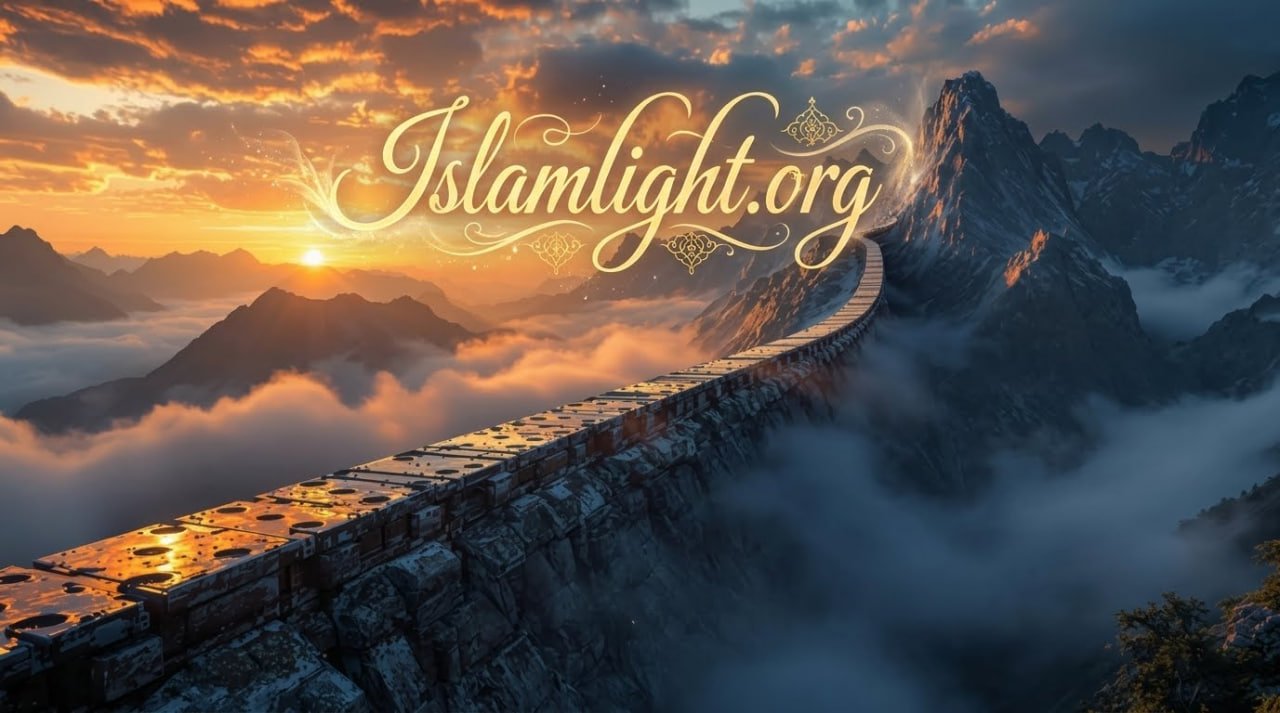
Ya’juj and Ma’juj are mentioned in the Quran and the authentic Sunnah. Their story is connected to Dhul-Qarnayn, a righteous ruler whom Allah granted authority and the means to establish a barrier against their corruption.
In Surah Al-Kahf, Allah describes how Dhul-Qarnayn encountered people who complained about the destructive behaviour of Ya’juj and Ma’juj. They asked him to construct a barrier between them and the people they threatened.
Dhul-Qarnayn built a strong barrier using iron and molten copper, acknowledging that its existence was ultimately a mercy from Allah.
“This is a mercy from my Lord; but when the promise of my Lord comes, He will make it level, and ever is the promise of my Lord true.”
Surah Al-Kahf (18:98) – Saheeh International
Their future emergence is described in Surah Al-Anbiya (21:96–97). Allah informs us that when they are released, they will descend rapidly from every elevation, and the true promise of the Resurrection will draw near.
Read Surah Al-Anbiya, verses 96–97.
Authentic narrations describe their enormous numbers and the extraordinary events that will follow their emergence. Prophet Isa and the believers with him will seek Allah’s help, and Allah will destroy Ya’juj and Ma’juj.
It is not appropriate to identify a modern nation, ethnic group, or political community as Ya’juj and Ma’juj simply because of geographical theories or similarities someone believes they have discovered. Such claims require evidence, not speculation.
Their prophesied end-time emergence has not been established as having occurred.
4. The Smoke: A Sign Mentioned in the Quran
Another major sign is the appearance of a great smoke. Allah mentions it directly in Surah Ad-Dukhan, making this event an important subject in discussions about the Last Day.
“Then watch for the Day when the sky will bring a visible smoke.”
Surah Ad-Dukhan (44:10) – Saheeh International
The following verses describe the smoke as a painful torment affecting people. Islamic scholars have discussed the interpretation of these verses and the relationship between the smoke mentioned in the Quran and the major sign described in Prophetic narrations.
There are differences among early scholars concerning whether the Quranic reference also relates to a smoke experienced during the Prophet’s lifetime. However, the smoke is explicitly included among the future major signs in the narration of Sahih Muslim.
Consequently, ordinary air pollution, volcanic ash, industrial emissions, or smoke from fires should not automatically be identified as the promised major sign.
The specific event described in the authentic reports has not been confirmed as having occurred.
5. The Beast of the Earth: A Remarkable Sign
Among the extraordinary signs of the Hour is the emergence of a creature from the earth, known in Arabic as Dabbat al-Ard.
Allah mentions this event in Surah An-Naml:
“And when the word befalls them, We will bring forth for them a creature from the earth speaking to them, [saying] that the people were, of Our verses, not certain [in faith].”
Surah An-Naml (27:82) – Saheeh International
This verse establishes the appearance of the Beast as a real sign of Allah. Authentic narrations also mention it among the events after which faith will no longer benefit someone who had previously rejected belief and had not earned good through faith.
However, the exact appearance, physical characteristics, and location of the Beast should not be described with certainty unless supported by reliable evidence.
Stories circulating online sometimes provide elaborate descriptions that cannot all be established from authentic sources. A responsible Muslim should distinguish what Allah and His Messenger have informed us from what people have added through imagination or speculation.
The emergence of this extraordinary creature has not been confirmed in our time.
6. The Rising of the Sun from the West
Perhaps one of the most striking signs of the Hour is the rising of the sun from the west rather than the east.
Every morning, humanity witnesses the sun rising according to the familiar order Allah has established in the universe. This extraordinary event will signal a profound change in the world as people know it.
The Prophet Muhammad (peace and blessings be upon him) informed us that when this sign occurs, people who had not previously believed will not benefit from believing at that moment, nor will those who had not earned good through their faith benefit from doing so.
Allah says:
“The Day that some of the signs of your Lord will come no soul will benefit from its faith as long as it had not believed before or had earned through its faith some good.”
Surah Al-An’am (6:158) – Saheeh International
This teaching carries a deeply important message: repentance and faith should not be postponed until the moment when the truth becomes undeniable to everyone.
We should turn to Allah while the opportunity to repent and perform righteous deeds remains open.
According to the authentic narrations, this event is still among the signs that have not been confirmed as having occurred.
7. The Three Great Landslides: In the East, West, and Arabian Peninsula
The Prophet Muhammad (peace and blessings be upon him) mentioned three extraordinary events in which the earth will swallow up a large area: one in the east, one in the west, and one in the Arabian Peninsula.
These are not simply references to ordinary earthquakes or isolated incidents of land subsidence. The hadith identifies them as specific major signs that will precede the Hour.
The narration in Sahih Muslim makes their locations clear, while Islamic scholarly explanations distinguish these promised events from other disasters that have occurred throughout history.
Natural disasters are real and can remind us of our vulnerability, but it is incorrect to declare every earthquake or landslide a fulfilment of this particular prophecy.
We should therefore avoid dramatic claims based on incomplete geographical interpretations or sensational social-media videos.
These three specific major events have not been established as having occurred.
8. The Great Fire That Will Drive People to Their Gathering Place
The final sign mentioned in the well-known narration is a fire that will emerge from the direction of Yemen and drive people towards their place of gathering.
This is not an ordinary fire caused by an accident, a forest fire, or a volcanic eruption. The Prophetic description refers to a particular event with an extraordinary role in the events preceding the Hour.
The Prophet (peace and blessings be upon him) explained that the fire would accompany people as they travelled, remaining with them when they stopped to rest.
The event is mentioned in Sahih Muslim 2901a and in other narrations concerning the gathering of humanity.
It is important to distinguish this event from the gathering of humanity after resurrection. The fire described in the hadith is one of the signs preceding the Hour and is associated with driving people towards their gathering place.
This particular sign has not been confirmed as having occurred in our time.
Read the relevant narrations in Sahih Muslim, Book of Tribulations.
The Mahdi: What Is His Place Among the Signs of the Hour?
There is another important figure frequently discussed in Islamic teachings about the end times: Al-Mahdi.
Authentic narrations describe a righteous man from the family of Prophet Muhammad (peace and blessings be upon him) who will appear near the end of time. Allah will establish justice through him after the earth has been filled with oppression and wrongdoing.
The Mahdi is discussed by scholars as one of the signs associated with the end times. However, he is not explicitly named as one of the ten signs in the specific enumeration of Sahih Muslim 2901a.
This distinction matters because different narrations and scholarly discussions address the end-time events through different groupings.
It is also important to avoid confusing the Mahdi with the Dajjal or with contemporary political or religious leaders. Claims that a particular person is the Mahdi require evidence and cannot be established through speculation.
For a detailed discussion of the Mahdi and the signs of the Hour, see:
IslamQA: The Mahdi and the authentic narrations concerning him.
Have Any Major Signs of the Day of Judgment Appeared Yet?
Now we come to the central question: how many of the major signs have appeared so far?
Based on the authentic descriptions of the ten major signs in Sahih Muslim and the established explanations of Islamic scholars, none of the ten extraordinary signs can be confidently identified as having been fulfilled in the manner described in the Prophetic narrations.
This does not mean that no signs of the Hour have appeared. Rather, it means we must distinguish the minor signs from the specific major events.
| Sign | Established status |
|---|---|
| Al-Masih Ad-Dajjal | Not confirmed as appeared |
| Descent of Isa | Not confirmed as occurred |
| Ya’juj and Ma’juj | Not confirmed as emerged |
| The great smoke | Not confirmed as occurred |
| The Beast of the Earth | Not confirmed as emerged |
| Sun rising from the west | Not occurred |
| Three great landslides | Not confirmed as occurred |
| The gathering fire | Not confirmed as occurred |
The table summarizes the ten signs, with the three landslides counted separately. The Mahdi is discussed separately because he appears in other end-time narrations and scholarly discussions.
Many minor signs, however, have occurred according to scholarly explanations, and others continue to be observed. Their occurrence should not be confused with the arrival of the major signs.
IslamQA provides a detailed discussion of both categories and the evidence concerning them:
Why We Must Avoid Misinterpreting Current Events
In an age when information travels across the world within seconds, claims about the end times can spread rapidly. A dramatic video, a frightening headline, or an unusual natural event can lead people to believe that a major sign has finally appeared.
But should we accept every claim simply because it sounds convincing or has been shared thousands of times?
Absolutely not. Islamic knowledge requires evidence, careful examination, and an understanding of the Quran and Sunnah. The fact that an event appears unusual does not automatically make it a sign of the Hour.
For example, an earthquake in a particular region does not establish that one of the three promised landslides has occurred. A political conflict does not prove that the Dajjal has appeared. A group of people migrating across geographical regions does not establish that Ya’juj and Ma’juj have emerged.
Similarly, natural smoke, pollution, or atmospheric phenomena cannot automatically be equated with the specific smoke described in the Islamic texts.
There is a difference between reflecting on an event and claiming that it fulfils a prophecy. The first can encourage beneficial reflection; the second requires reliable evidence.
The safest approach is to return to authentic sources, consult qualified scholars, and avoid spreading claims that may frighten people or distort their understanding of Islam.
What Does the Quran Teach Us About the Hour?
The Quran repeatedly reminds humanity that this worldly life is temporary and that the Resurrection is certain. It does not provide a calendar for the end of the world, but it provides something much more important: guidance about how to live before that day arrives.
1. The Knowledge of the Hour Belongs to Allah
Allah says:
“Indeed, Allah [alone] has knowledge of the Hour and sends down the rain and knows what is in the wombs. And no soul perceives what it will earn tomorrow, and no soul perceives in what land it will die. Indeed, Allah is Knowing and Acquainted.”
Surah Luqman (31:34) – Saheeh International
This verse reminds us that human knowledge has limits. We may study signs, recognize patterns, and learn from revelation, but the exact time of the Hour remains with Allah alone.
2. Every Soul Will Face Accountability
The Day of Judgment is not merely an extraordinary future event. It is the day when every individual will stand before Allah and answer for their deeds.
Allah says:
“So whoever does an atom’s weight of good will see it, And whoever does an atom’s weight of evil will see it.”
Surah Az-Zalzalah (99:7–8) – Saheeh International
Imagine the smallest action that you thought nobody noticed. A sincere word, a hidden act of charity, a moment of patience, or an injustice committed in private: nothing escapes the knowledge of Allah.
3. The Worldly Life Is Temporary
Allah reminds us that worldly possessions, status, and achievements cannot replace the lasting success of the Hereafter.
Understanding the signs of the Hour should therefore bring our priorities into perspective. We should not become so occupied with predicting future events that we neglect the obligations and opportunities of today.
How Should Muslims Prepare for the Day of Judgment?
Perhaps the most important question is not how many signs have appeared, but what we are doing with the time Allah has given us.
Knowing about the Dajjal, the descent of Isa, or the emergence of Ya’juj and Ma’juj is valuable knowledge. Yet knowledge should lead to action. A person may know many details about the Last Day while neglecting prayer, mistreating others, or delaying repentance.
What benefit is there in learning about the signs if we do not allow that knowledge to improve our relationship with Allah?
Strengthen Your Relationship with Allah
Begin with the obligations of Islam. Guard your five daily prayers, maintain sincerity, seek forgiveness, and avoid deliberately persisting in sin. Remember that repentance is not simply a feeling of regret; it involves turning back to Allah and striving to correct one’s actions.
Learn the Quran and Authentic Sunnah
Study the Quran with understanding, and learn the authentic teachings of the Prophet Muhammad (peace and blessings be upon him). When reading about the end times, distinguish reliable narrations from weak or fabricated reports.
Seek Protection from the Trial of the Dajjal
Learn the relevant supplications and memorize the first ten verses of Surah Al-Kahf. Make a habit of seeking refuge with Allah from the trials of life and death and from the trial of the Dajjal.
Treat Other People with Justice and Mercy
Faith should influence how we treat our parents, families, neighbours, strangers, and even those with whom we disagree. Do not let discussions about the end times make you forget the daily responsibilities that Allah has placed upon you.
Do Not Postpone Repentance
One of the clearest lessons from the major signs is that there will come a time when certain opportunities for faith and repentance will no longer be available. We should not wait for extraordinary events to remind us to worship Allah.
We do not know how long our individual lives will last. Death may come to a person long before the major signs appear. For each of us, the beginning of the Hereafter is connected to the end of our worldly life.
So let us prepare while we still have the opportunity.
Conclusion: The Question Is More Personal Than We Think
How many major signs of the Day of Judgment have appeared so far? According to the authentic descriptions in the Sunnah, none of the ten extraordinary major signs mentioned in Sahih Muslim has been reliably established as having occurred in its promised form.
Many minor signs have appeared, and some continue to unfold. However, we must not confuse ordinary events, natural disasters, political developments, or unverified internet claims with the specific major signs revealed to us.
The Quran and Sunnah teach us that the Hour is certain, but its exact time belongs exclusively to Allah. Our responsibility is not to predict its arrival, but to prepare for it with sincere faith, repentance, worship, and good deeds.
Perhaps the most meaningful reflection is this: we may not witness the major signs during our lifetime, but none of us knows when our own final hour will arrive.
Do not allow curiosity about the future to distract you from the opportunity to do good today. Return to Allah, seek His forgiveness, learn His guidance, and treat His creation with justice and mercy.
The Hour is certain. Its timing is unknown. Our preparation is our responsibility.
May Allah guide our hearts, forgive our shortcomings, protect us from the trials of life and death, and grant us a good ending. Ameen.
Frequently Asked Questions
1. How many major signs of the Day of Judgment are there in Islam?
The Prophet Muhammad (peace and blessings be upon him) mentioned ten major signs in the authentic narration of Hudhayfah ibn Usayd recorded in Sahih Muslim 2901a. These include the Dajjal, the descent of Isa, Ya’juj and Ma’juj, the smoke, the Beast, the rising of the sun from the west, three landslides, and the gathering fire.
2. Have any of the ten major signs appeared yet?
None of the ten extraordinary signs has been reliably established as having occurred in its specific prophetic form. Some minor signs, however, have occurred according to Islamic scholarly explanations.
3. Is the appearance of the Mahdi one of the ten major signs?
The Mahdi is mentioned in authentic end-time narrations and is discussed by scholars among the signs associated with the Last Day. However, he is not explicitly included in the specific list of ten in Sahih Muslim 2901a.
4. Does Islam tell us when the Day of Judgment will happen?
No. The exact timing of the Hour is known only to Allah. Surah Al-A’raf (7:187) clearly establishes that knowledge of its appointed time belongs to Him alone.
5. How can Muslims protect themselves from the Dajjal?
Muslims should seek refuge in Allah from the Dajjal’s trial, learn the authentic Prophetic supplications, and memorize the first ten verses of Surah Al-Kahf. They should also strengthen their faith through worship, knowledge, and sincere obedience to Allah.
References and Further Reading
For readers who wish to investigate the evidence independently, the following primary and scholarly references are recommended.
- Sahih Muslim 2901a – The Ten Major Signs
- Sahih Muslim 2901b – The Signs Before the Hour
- IslamQA – Signs of the Hour
- IslamQA – Sources of Islamic Legislation
- IslamQA – Guidelines for Distinguishing Authentic Hadith
- The Quran – Saheeh International Translation
- Sunnah.com – Authentic Hadith Collections
Quranic translations are attributed to Saheeh International. Hadith references should be checked in their full context and with their respective authenticity gradings.