
Do Muslims Worship Prophet Muhammad ﷺ or the Black Stone?
Among the most frequently repeated misconceptions about Islam is the claim that Muslims worship Prophet Muhammad ﷺ or that kissing the Black Stone during pilgrimage resembles idol worship.
Although these allegations are widespread, they collapse immediately when examined through authentic Islamic teachings.
Indeed, anyone who sincerely studies the Qur’an and the authentic Sunnah quickly discovers that Islam teaches the exact opposite.
From its very beginning, Islam has uncompromisingly proclaimed one central message:
Worship belongs to Allah alone.
No prophet, angel, righteous person, object, or created being deserves even the smallest act of worship.
Who Was Prophet Muhammad ﷺ?
The Qur’an repeatedly reminds believers that Muhammad ﷺ was not a divine being.
He was neither the son of God nor an incarnation of God.
He was a human being chosen by Allah to convey His final revelation to humanity.
Like every prophet before him, his role was to guide people toward worshipping the Creator—not himself.
Qur’an — Surah Al-Kahf (18:110)
“Say, ‘I am only a man like you, to whom has been revealed that your god is one God.'”
Sahih International Translation
https://quran.com/18/110?translations=20
This declaration is remarkable in its simplicity.
Rather than elevating himself above humanity, the Prophet ﷺ openly affirmed his humanity while emphasizing that revelation came solely from Allah.
His mission was never to direct worship toward himself.
Instead, he consistently redirected people’s hearts toward their Lord.
He Never Claimed Divinity
History records many leaders who sought wealth, fame, political dominance, or personal worship.
Muhammad ﷺ did precisely the opposite.
Whenever people attempted to exaggerate his status, he corrected them immediately.
He warned his followers against elevating him beyond his rightful position.
Authentic Hadith
“Do not exaggerate in praising me as the Christians exaggerated in praising the son of Mary. I am only His servant, so say: the servant of Allah and His Messenger.”
Reference:
Sahih al-Bukhari
https://sunnah.com/bukhari:3445
This authentic narration beautifully summarizes Islamic belief regarding the Prophet ﷺ.
Muslims love him deeply.
They strive to follow his example.
They send blessings upon him.
Yet none of these acts constitute worship.
Love and obedience are not the same as divinity.
A devoted child honors loving parents without worshipping them.
Likewise, Muslims revere the Messenger of Allah ﷺ because Allah commanded them to love and follow His Messenger—not because he possesses divine qualities.
Why Do Muslims Kiss the Black Stone?
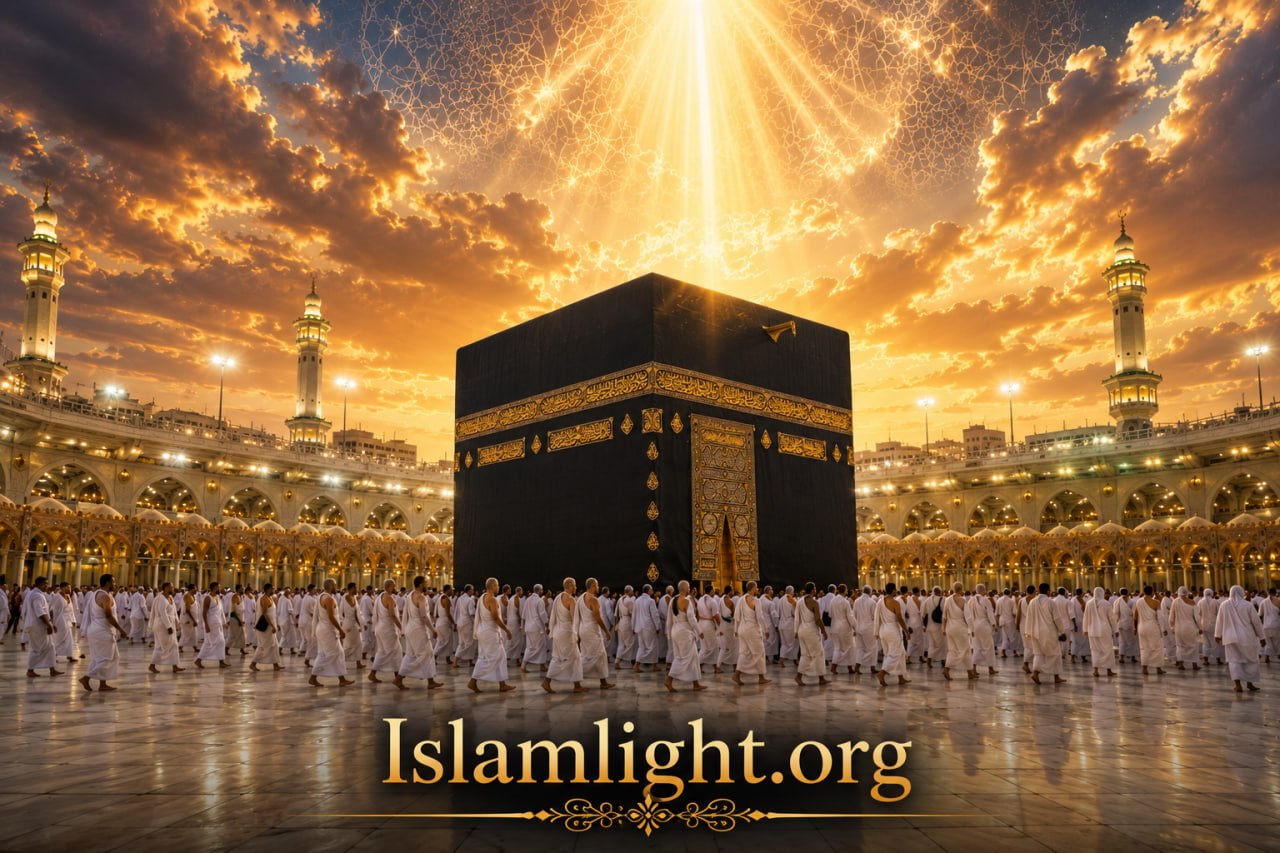
Perhaps no Islamic ritual has been misunderstood more frequently than the Black Stone (Al-Hajar Al-Aswad) situated in one corner of the Ka’bah.
Some critics mistakenly conclude that kissing the stone resembles idol worship.
However, this misunderstanding disappears once we ask a simple question:
What do Muslims actually believe about the Black Stone?
The answer is straightforward.
Muslims believe that the Black Stone possesses no independent power whatsoever.
It cannot answer prayers.
It cannot forgive sins.
It cannot grant blessings through its own ability.
It cannot benefit anyone.
It cannot harm anyone.
It is merely one of Allah’s created objects.
The Prophet ﷺ kissed the Black Stone because Allah instructed certain acts of worship during Hajj and ‘Umrah.
Just as Muslims pray facing the Ka’bah without worshipping the Ka’bah itself, they may kiss the Black Stone as an act of obedience to Allah—not because they worship the stone.
The distinction is fundamental.
The object is not worshipped.
Allah alone is worshipped.
The Powerful Statement of Umar ibn Al-Khattab رضي الله عنه
One of the clearest historical explanations comes from the second Caliph, Umar ibn Al-Khattab رضي الله عنه.
As he approached the Black Stone, he publicly declared words that every Muslim should know.
Authentic Hadith
“I know that you are only a stone; you can neither benefit nor harm. Had I not seen the Messenger of Allah ﷺ kissing you, I would never have kissed you.”
Reference:
Sahih al-Bukhari
https://sunnah.com/bukhari:1597
Few statements could be clearer.
The Black Stone has no divine power.
No Muslim prays to it.
No Muslim seeks forgiveness from it.
No Muslim believes it controls destiny.
It is honored solely because the Prophet ﷺ honored it while worshipping Allah.
Following a Command Is Not Worshipping an Object
Consider a simple analogy.
A citizen respectfully salutes the national flag.
No reasonable observer concludes that the citizen worships cloth.
Rather, the action symbolizes obedience, identity, and respect for what the flag represents.
Likewise, a patient follows a physician’s prescription without believing the paper itself possesses healing powers.
The action is directed toward obeying the physician.
Similarly, Muslims kiss the Black Stone because Allah prescribed this act through His Messenger ﷺ.
The worship is directed entirely to Allah.
The stone remains exactly what Umar رضي الله عنه described:
a stone that neither benefits nor harms.
The Essence of Islamic Worship
Islam distinguishes carefully between respect, love, and worship.
Respect may be shown to parents, teachers, prophets, and sacred places.
Love may be felt for righteous people.
But worship—including prayer, ultimate reliance, sacrifice, vows, and supplication—is reserved exclusively for Allah.
This distinction safeguards the purity of monotheism and protects believers from elevating any created being to the status that belongs only to the Creator.
“The Prophet Muhammad ﷺ never invited humanity to worship him. Every sermon, every prayer, and every revelation called people to worship Allah alone.”
Having clarified whom Muslims worship, we now arrive at an even deeper question. If Muhammad ﷺ was neither divine nor self-appointed, then who was he? In the next chapter, by Allah’s will, grace and mercy, we will examine the historical, moral, psychological, and rational evidence surrounding his prophethood and address one of history’s most famous challenges: Was he a liar, deluded, or truly the Messenger of God?