
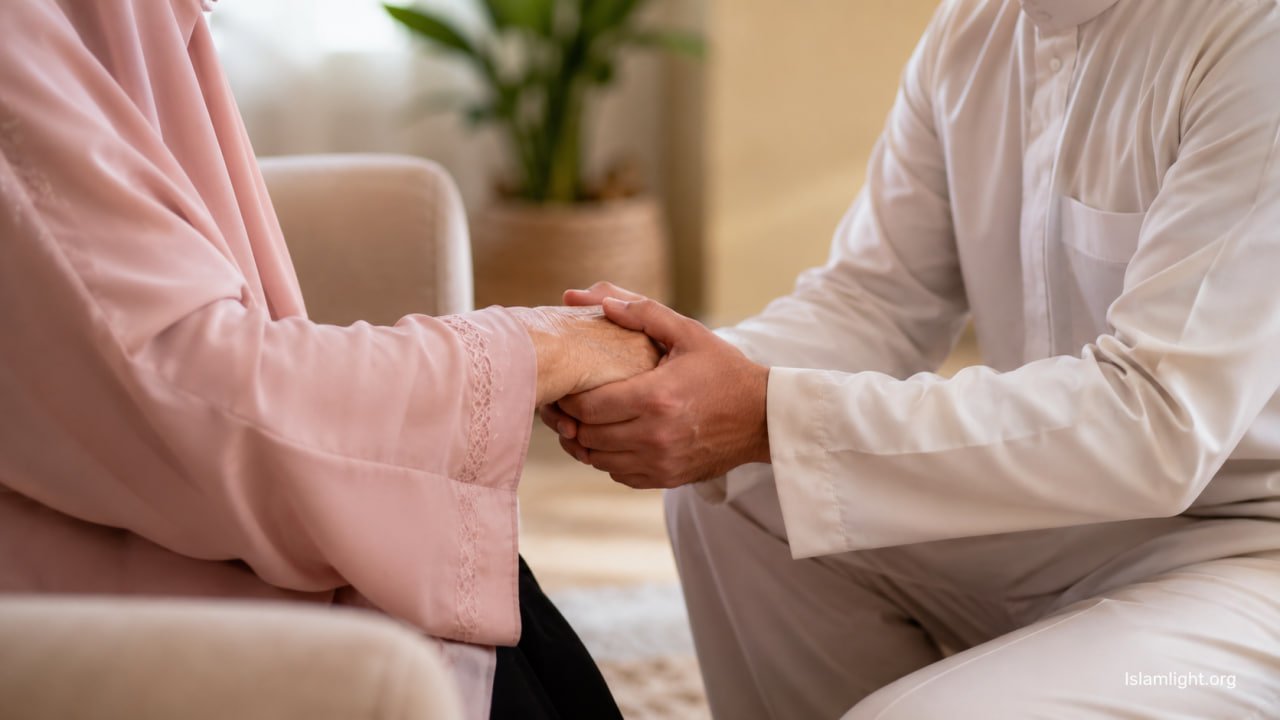

True Masculinity and the Elevation of Women in Islam:
Refuting Exploitation, Takhbeeb, and Modern Devaluation
A comprehensive theological, philosophical, and sociological study into the protective rights, domestic honors, and divine status granted to women in authentic Islamic jurisprudence.
My beloved brothers, my respected sisters, and truth-seekers worldwide: Let us open our hearts to reflect upon a matter of immense importance. In a world that frequently misinterprets true power, where societal narratives shift like sand, Islam came down over fourteen centuries ago to anchor human dignity in a divine reality. It did not merely give rights; it redefined the very essence of honor. Let us journey together through the authentic sources of our faith to understand the majestic place of women in Islam.
1. The Illusions of Dominance: The Severe Sin of Emotional Deception
In certain contemporary social settings, there is a dangerous, toxic notion that playing with the emotions of young women is a mark of masculine cleverness or charm. Some individuals take pride in leading women on with false, calculated promises of marriage, utilizing their trust to satisfy passing desires, temporary impulses, or personal amusement.
Let us be clear: in the light of authentic Islamic jurisprudence, this behavior is viewed as a severe moral failure. It is an act of pure deception, and Islam completely strips the honor of masculinity from anyone who builds their ego on the breaking of a woman’s heart. The Prophet Muhammad ﷺ warned against this precise psychological profile using language that should terrify the conscious believer:
“A deceiver, a miser, and one who reminds people of his charity will not enter Paradise.”
Scholars of Islamic theology point out that the word used in classical texts for this kind of person is Al-Khibb—a deceptive, malicious trickster who intentionally uses manipulation to exploit someone’s emotional vulnerability. Islam honors trust as a sacred covenant. To manipulate a woman’s pure intentions for a fleeting whim is to place oneself directly outside the character of a true believer.
2. The Destruction of Sanctuary: The Evil of Takhbeeb (Marital Sabotage)
The peace, stability, and emotional tranquility of a married couple form the bedrock of a healthy society. Because the domestic sanctuary is so vital, Islamic law sets an unyielding boundary against anyone who attempts to sabotage a woman’s relationship with her husband. This destructive act is known textually as Takhbeeb.
Takhbeeb manifests when an outsider enters the emotional landscape of a married woman—whether through direct communication, digital messaging, or modern commentary—and deliberately creates resentment. It includes making her feel unappreciated, convincing her that she deserves someone better, or encouraging her to break her marriage vows out of hidden lust or destructive intent. The Messenger of Allah ﷺ explicitly cut ties with anyone who commits this act:
“He is not one of us who incites a woman against her husband or a slave against his master.”
When an instigator poisons a wife’s heart under the pretext of ‘sympathy’ or ‘freedom,’ they are performing the exact work of spiritual corruption. Islam fiercely guards the family structure because when a home collapses, children are scattered, and society’s moral safety net begins to fray.
3. Rebuking Domestic Cruelty and the Obligation of Upright Leadership
True Islamic manhood is never found in harshness, insults, or physical intimidation. When a man uses verbal abuse, offensive slurs, or physical harm against his wife, he is not displaying authority; he is demonstrating a complete lack of self-control. The Prophet Muhammad ﷺ absolutely condemned domestic cruelty, stating clearly that men who resort to such abuse are never from among the best of believers.
Let us reflect upon the historical context of this message. The Messenger of Allah ﷺ brought these revolutionary standards into a historical environment that was incredibly harsh toward women—a society where treating a wife as a fully honored human being with sacred rights was virtually unheard of. Yet, Allah Almighty commanded in the Holy Qur’an:
{وَعَاشِرُوهُنَّ بِالْمَعْرُوفِ}
“And live with them in kindness.”
— Surah An-Nisa [4:19] – Sahih International
{وَأَخَذْنَا مِنْكُمْ مِيثَاقًا غَلِيظًا}
“…and they have taken from you a solemn covenant?”
— Surah An-Nisa [4:21] – Sahih International
To ensure no man could mistake his duty, the Prophet ﷺ explicitly connected a man’s spiritual value to his domestic character:
“The best of you are the best to their families, and I am the best to my family.”
Furthermore, true spiritual leadership requires active, loving guidance. To completely neglect the education, counsel, and well-being of your wife, sister, or daughter—leaving them without gentle support in their worldly or spiritual affairs—is a severe failure of responsibility. A true believer guides his family with patience, warmth, and wisdom, never with tyranny.
4. Legal Protection of Honor: The Severe Penalty for Slander
To truly understand how deeply Islam values a woman’s social standing, one must examine the strict legal boundaries established in the Qur’an to protect her honor. In an Islamic judicial system, a woman’s reputation is completely unassailable. If anyone dare cast a casual insult or bring a baseless accusation against a woman’s modesty, the law does not take it lightly. The individual must produce four credible eyewitnesses, or face an immediate, ironclad legal judgment:
{وَالَّذِينَ يَرْمُونَ الْمُحْصَنَاتِ ثُمَّ لَمْ يَأْتُوا بِأَرْبَعَةِ شُهَدَاءَ فَاجْلِدُوهُمْ ثَمَانِينَ جَلْدَةً وَلَا تَقْبَلُوا لَهُمْ شَهَادَةً أَبَدًا ۚ وَأُولَٰئِكَ هُمُ الْفَاسِقُونَ}
“And those who accuse chaste women and then do not produce four witnesses – lash them with eighty lashes and do not accept from them testimony ever after. And those are the defiantly disobedient.”
— Surah An-Nur [24:4] – Sahih International
Let us contemplate the profound depth of this ruling. A single slanderous word uttered to damage a woman’s honor results in three severe consequences: a physical sentence of eighty lashes, permanent disqualification from ever giving legal testimony again, and a divine label as a corrupt transgressor. Islam builds an iron wall around a woman’s name, ensuring she is never made a victim of malicious gossip or social degradation.
5. The Prophetic Example: A Legacy of Practical Tenderness
The system brought by Islam was not a theoretical philosophy; it was a living reality beautifully demonstrated by the Prophet Muhammad ﷺ himself. His life was filled with delicate, unmatched expressions of respect and love toward the women in his household. Long after his beloved first wife, Khadijah (may Allah be pleased with her), had passed away, he would regularly slaughter a sheep and send the finest portions to her lifelong friends, out of pure loyalty to her memory.
When drinking water, he would carefully look for the exact spot where his wife Aisha had placed her lips, and he would turn the vessel to place his lips upon that very same spot. Whenever his daughter Fatimah walked into a room, he would stand up instantly, take her by the hand, kiss her tenderly between her eyes, and seat her in his own place.
When his final moments came to pass, the Messenger of Allah ﷺ chose to leave this temporary world while resting in the room of Aisha, with his head placed gently against her chest. Some of his very last words to humanity during his farewell sermon were an unyielding reminder:
“O people, I enjoin you to treat women kindly…”
This transformation profoundly reshaped the minds of his companions. The second Caliph of Islam, Umar ibn al-Khattab, openly observed: “By Allah, during the days of ignorance (Jahiliyyah), we did not give weight to women in any matter until Allah revealed regarding them what He revealed and assigned for them what He assigned.”
6. Sociological Realities: Divine Elevation vs. Contemporary Vulnerability
To truly see this scriptural system alive today, one need look no further than a beautiful, real-world image seen outside a community medical center late at night: an elderly, fragile mother stepping out into the cool air, completely surrounded and protected by her grown adult sons. One son carefully pulls the car around; another offers his arm so she can lean on him with absolute safety; a third son walks beside her, reverently holding her walking cane. This is not an artificial display; it is the organic result of a faith that explicitly dictates that an aging mother holds the highest right to her children’s deep devotion and care.
Let us logically contrast this picture of family reverence with the societal shifts advocated by hyper-secularized, modern lifestyle models. When traditional family frameworks are discarded in favor of temporary, casual arrangements—such as trial cohabitation or relationship models devoid of permanent, legal commitments—the heavy social and emotional cost is almost always borne disproportionately by women.
The Modern Dilemma: When relationships are stripped of divinely ordained legal accountability and permanent responsibilities, individuals are too often left vulnerable to sudden abandonment. Far too many women under these shifting social systems find themselves facing unexpected single parenthood or navigating old age in complete isolation, separated from a cohesive family unit to guard and cherish them.
Ideologies that encourage fleeting, temporary connections often pull down the very safety nets that secure a woman’s lifelong honor, financial safety, and emotional peace. Islam refuses to leave a woman’s well-being to chance or short-term convenience. Instead, it anchors her life in solid, permanent honor—guaranteeing her protective care as a cherished daughter, a respected wife, and an ultimate gateway to Paradise as an adored mother.