
The Truth About Paradise in Islam
Why Jannah Combines Physical Delight, Spiritual Perfection, and the Greatest Reward of Seeing Allah
📖 Table of Contents
- Introduction
- Does the Bible Describe a Purely Spiritual Heaven?
- Are Resurrected Bodies Real Bodies?
- Why Bodily Reward Makes Sense
- Why Allah Created Human Beings With Bodies
- What Is Paradise in Islam Really Like?
- The Greatest Reward: Seeing Allah
- Islamic and Biblical Comparisons
- Frequently Asked Questions
- Final Reflection
One of the most common criticisms directed at Islam is the claim that its description of Paradise focuses excessively on food, drink, marriage, and physical enjoyment. Some critics among our Christian friends ask:
“Why would anyone desire a Paradise containing physical pleasures? Wouldn’t a purely spiritual existence be superior?”
At first glance, the question may sound profound. Yet when we carefully examine both Islamic and Biblical scriptures, a surprising reality emerges: neither tradition portrays the eternal reward as a disembodied existence detached from human nature.
In fact, both the Qur’an and numerous of their Biblical passages describe a future reward involving joy, fulfillment, celebration, peace, and even elements commonly associated with bodily existence.
The deeper question therefore is not whether Paradise contains blessings that human beings can experience, but rather:
Why did God create human beings as a union of body and soul if only one of them were destined for eternal reward?
Islam answers this question beautifully. Paradise is not merely physical pleasure. Nor is it merely spiritual contemplation. Rather, it is the perfection of human existence itself—where body and soul are both honored, purified, and brought near to their Creator.
Does the Bible Describe a Purely Spiritual Heaven?
Many people assume that the Biblical concept of Heaven is entirely non-physical. Yet several passages describe imagery involving eating, drinking, feasting, fruit-bearing trees, and resurrected bodies.
Different Christian traditions interpret these passages differently. Some understand them symbolically, while others see them as reflecting aspects of a real future existence. Regardless of interpretation, these texts demonstrate that Scripture itself frequently uses physical imagery when describing eternal reward.
Eating and Drinking in the Kingdom
“that you may eat and drink at my table in my kingdom…”
— Luke 22:30
The imagery is striking. A table, eating, and drinking are all presented as part of the future reward promised to the faithful.
Whether understood literally or symbolically, the language itself communicates abundance, fellowship, joy, and divine generosity.
A Great Feast Prepared by God
“On this mountain the Lord Almighty will prepare a feast of rich food for all peoples, a banquet of aged wine…”
— Isaiah 25:6
This passage presents one of the most vivid descriptions of divine celebration found in Scripture. The imagery emphasizes generosity, abundance, victory, and honor bestowed upon the righteous.
The Tree of Life and Its Fruits
“On each side of the river stood the tree of life, bearing twelve crops of fruit, yielding its fruit every month.”
— Revelation 22:2
The description includes a river, a tree, recurring fruit, and continual provision. Such imagery again demonstrates that Biblical descriptions of eternal life frequently include elements associated with tangible blessing and delight.
The point is not that Christianity and Islam describe Paradise identically. They do not.
Rather, the point is that the idea of heavenly reward involving meaningful enjoyment is not unique to Islam. Therefore, criticizing Islam merely because it describes blessings that human beings can appreciate physically is far less convincing than many assume.
Key Reflection
If Scripture itself describes eating, drinking, feasting, rivers, fruits, and resurrected bodies, then the real discussion should not be whether God rewards His servants through blessings they can enjoy, but how those blessings relate to the complete fulfillment of human nature.
Are Resurrected Bodies Real Bodies?
A common assumption is that eternal life must involve abandoning the body altogether. Yet many Biblical passages describing the resurrection present something very different: a restored and tangible existence.
While Christians differ regarding the precise nature of resurrected bodies, the New Testament repeatedly emphasizes continuity between earthly identity and future resurrection.
“Flesh and Bones”
“See my hands and my feet, that it is I myself. Touch me, and see. For a spirit does not have flesh and bones as you see that I have.”
— Luke 24:39
According to this passage, Jesus distinguishes himself from a mere spirit by referring to flesh and bones. The statement emphasizes recognizability, continuity, and tangible existence after resurrection.
Eating After Resurrection
“They gave him a piece of broiled fish and some honeycomb. And he took it and ate before them.”
— Luke 24:42–43
The narrative presents a resurrected individual who can be seen, touched, recognized, and who eats in the presence of others.
This does not mean that Islamic and Christian teachings concerning the afterlife are identical. However, it does demonstrate that the concept of embodied existence after death is not foreign to Biblical teaching.
Important Observation
If God intends to resurrect human beings rather than permanently discard their bodies, then bodily reward becomes neither irrational nor surprising. It becomes part of restoring the complete human being.
A Question of Divine Justice:
Why Punishment for the Body but No Reward?
Another important point concerns consistency.
Many religious traditions describe punishment in ways that involve physical suffering. If bodily pain can be part of divine justice, why should bodily reward be considered inappropriate?
The Rich Man’s Thirst
“Send Lazarus to dip the end of his finger in water and cool my tongue, because I am in agony in this fire.”
— Luke 16:24
The imagery includes thirst, heat, water, and physical distress.
The Fire That Is Not Quenched
“Where their worm does not die and the fire is not quenched.”
— Mark 9:48
The description emphasizes continual punishment using imagery that readers readily understand as severe suffering.
Weeping and Gnashing of Teeth
“There will be weeping and gnashing of teeth.”
— Matthew 13:42
Again, bodily imagery is employed to communicate anguish and loss.
A Reflection Worth Considering
The One who created nerves capable of feeling pain also created eyes capable of seeing beauty, tongues capable of tasting sweetness, ears capable of hearing pleasant sounds, and hearts capable of experiencing joy.
If bodily suffering can be part of divine punishment, why should bodily delight be excluded from divine reward?
Islam answers this question by teaching that Allah rewards the entire person. Human beings obey Allah with their hearts, minds, tongues, hands, eyes, ears, and bodies. Therefore, reward encompasses the whole person as well.
Why Did Allah Create Human Beings With Bodies?
The Qur’an presents human beings as a unique creation composed of both body and soul.
Unlike angels, who were created for a different purpose, human beings live a worldly test involving choices, desires, responsibilities, gratitude, sacrifice, and worship.
Allah created us with:
- Taste to enjoy lawful provision.
- Sight to appreciate beauty and recognize signs.
- Hearing to receive guidance.
- Touch to interact with creation.
- Emotion to love, hope, fear, and worship.
Islam does not teach that the body is inherently evil.
Rather, the body becomes noble when used in obedience to Allah and blameworthy when used in disobedience.
The problem is not pleasure itself.
The problem is seeking pleasure through what Allah has forbidden.
Islam teaches that lawful blessings are gifts from Allah, while Paradise represents the perfection of those blessings without any corruption, sin, suffering, fear, jealousy, aging, disease, or death.
The Islamic View of Human Fulfillment
Some people imagine that spirituality requires rejecting all enjoyment.
Islam presents a more balanced understanding.
True human fulfillment is not found in becoming less human. Rather, it is found in becoming the best version of the human being Allah created.
In this life, every pleasure is limited:
- Food ends.
- Health declines.
- Youth fades.
- Relationships experience difficulties.
- Happiness comes and goes.
Paradise removes these limitations completely.
There is pleasure without guilt.
Joy without fear.
Love without loss.
Life without death.
Peace without anxiety.
And above all, nearness to the Creator without separation.
Paradise in Islam Is Not Merely Physical
It is the complete perfection of body, soul, heart, mind, and faith—culminating in the greatest reward that no worldly pleasure can equal: the pleasure of Allah and the honor of seeing Him.
What Is Paradise in Islam Really Like?
Many discussions about Paradise focus on isolated descriptions while ignoring the broader Qur’anic picture.
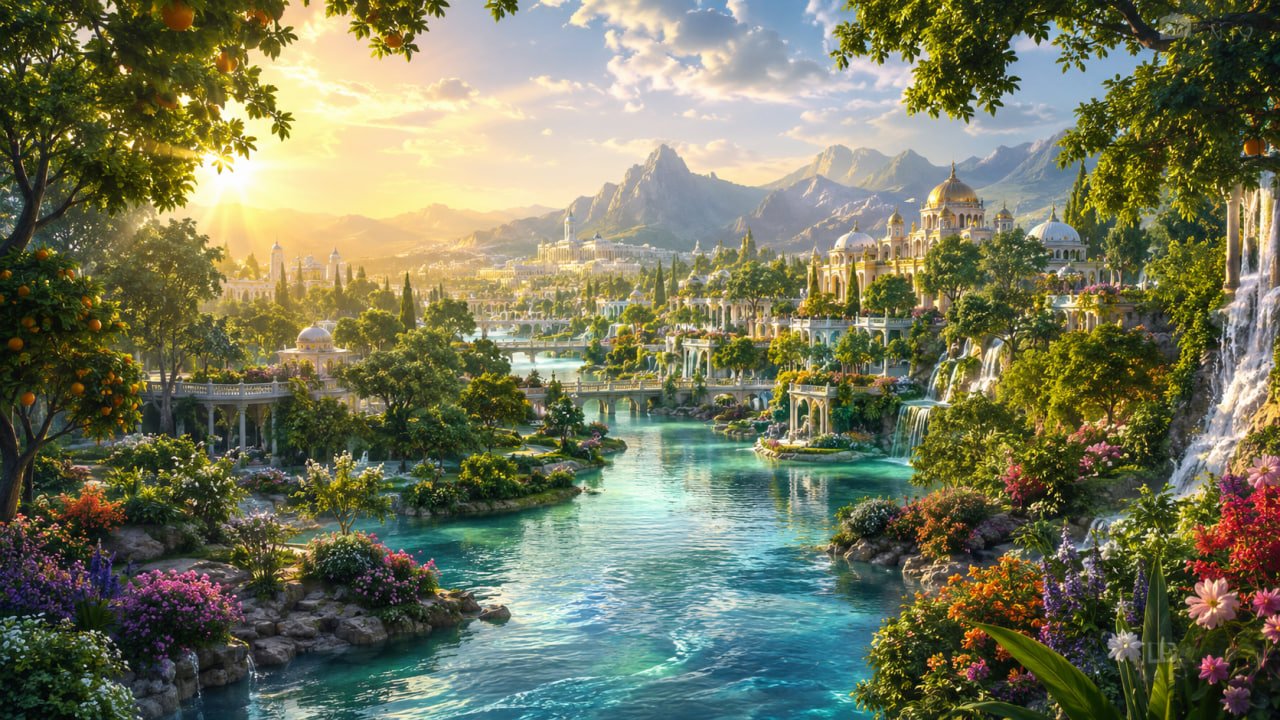
The Qur’an presents Jannah as the final home of peace, purity, security, happiness, and closeness to Allah. It is not merely a place of physical enjoyment, nor merely a realm of abstract spirituality. Rather, it is the complete perfection of everything human beings were created to desire in a pure and noble way.
The blessings of Paradise are described in terms that human beings can understand, while their true reality remains beyond worldly experience.
Paradise Contains What No Human Being Can Fully Imagine
The Messenger of Allah ﷺ said:
“Allah said: I have prepared for My righteous servants what no eye has seen, no ear has heard, and no human heart has conceived.”
Source:
Sahih al-Bukhari 3244
This hadith establishes an important principle.
The descriptions found in the Qur’an are real, but the reality of Paradise is greater than our present imagination. The names may be familiar—gardens, rivers, fruits, palaces—but their perfection surpasses anything known in this world.
Gardens Beneath Which Rivers Flow
“Allah has promised the believing men and believing women gardens beneath which rivers flow, wherein they abide eternally…”
Qur’an 9:72
One of the most repeated descriptions of Paradise in the Qur’an is that of beautiful gardens nourished by flowing rivers.
These rivers symbolize abundance, life, beauty, and everlasting provision. Unlike worldly blessings, they never dry up, never become polluted, and never disappear.
Rivers Unlike Anything on Earth
“ wherein are rivers of water unaltered, rivers of milk the taste of which never changes, rivers of wine delicious to those who drink, and rivers of purified honey”
Qur’an 47:15
It is important to understand that the wine of Paradise bears no resemblance to the intoxicating drinks of this world.
Earthly alcohol impairs judgment, causes addiction, destroys families, and clouds the mind.
The drink of Paradise contains none of these harms.
The Qur’an specifically describes it as pure, delightful, and free from the negative consequences associated with worldly intoxicants.
Abundant Fruits and Provision
“For them therein is fruit, and for them is whatever they request [or wish]”
Qur’an 36:57
The Qur’an repeatedly describes fruits, food, and provision in Paradise.
However, these blessings are not presented as mere consumption. Rather, they symbolize Allah’s generosity and the complete removal of scarcity, deprivation, and hardship.
The inhabitants of Paradise never experience hunger, thirst, disappointment, or fear of losing what they possess.
A Beautiful Observation
In this world, every pleasure comes with a limitation.
- Food eventually runs out.
- Beauty fades.
- Possessions are lost.
- Health weakens.
- Life ends.
Paradise removes every limitation while preserving every blessing.
Magnificent Homes and Eternal Security
“But those who have feared their Lord – for them are chambers, above them chambers built high, beneath which rivers flow. [This is] the promise of Allāh. Allāh does not fail in [His] promise.”
Qur’an 39:20
Paradise is described as a place of beauty, dignity, and honor.
Believers are not merely rescued from punishment. They are welcomed as honored guests by their Lord.
The Prophet ﷺ described palaces, mansions, and extraordinary blessings prepared for the righteous, reflecting Allah’s immense generosity toward His faithful servants.
Pure Companionship and Perfect Relationships
One of the most misunderstood aspects of Paradise concerns companionship and marriage.
The Qur’an describes pure spouses and harmonious relationships, but these descriptions must be understood within the broader context of Paradise itself.
There is:
- No jealousy.
- No betrayal.
- No abuse.
- No selfishness.
- No heartbreak.
- No emotional wounds.
Every relationship in Paradise is purified from the flaws and pain that characterize worldly relationships.
This verse is one of the keys to understanding Islamic teachings about Paradise.
The people of Jannah are not simply placed in a beautiful location. Their hearts themselves are perfected.
No Grief, No Fear, No Sorrow
“Indeed, those who believe and do righteous deeds and establish prayer and give zakāh will have their reward with their Lord, and there will be no fear concerning them, nor will they grieve.”
Qur’an 2:277
Human beings spend much of their lives carrying worries:
- Fear of the future.
- Regret over the past.
- Anxiety in the present.
- Pain from loss.
- Concern over death.
Paradise removes every source of fear and sadness forever.
This emotional and psychological perfection is one of the greatest blessings promised by Allah.
Paradise Is More Than Pleasure
Paradise is complete peace.
Complete security.
Complete love.
Complete purity.
Complete happiness.
And complete nearness to the Creator.
A Common Misconception About Islamic Paradise
One of the most persistent misconceptions about Islam is the claim that Paradise is merely a place of physical enjoyment.
This criticism usually arises when a person focuses on a few descriptions while overlooking the larger picture presented throughout the Qur’an and the Sunnah.
The reality is that Islamic teachings describe Paradise as the complete fulfillment of human existence. Physical blessings are certainly part of Jannah, but they are not its highest feature.
The highest reward is not a river, a palace, a garden, a fruit, or even eternal life itself.
The greatest reward is Allah’s pleasure and the honor of seeing Him.
The Greatest Delight: Seeing Allah
Allah says:
“For them who have done good is the best [reward] – and extra.”
(Qur’an 10:26)
The Prophet ﷺ explained the meaning of the “extra” mentioned in this verse.
“When the people of Paradise enter Paradise, Allah will say: Do you wish Me to give you anything more?
They will say: Have You not brightened our faces? Have You not admitted us to Paradise and saved us from the Fire?
Then the veil will be lifted, and they will not have been given anything more beloved to them than looking at their Lord.”
Source:
Sahih Muslim 181
This hadith is one of the most profound texts regarding Paradise.
It teaches that after receiving every imaginable blessing, the believers will discover a joy greater than all of them combined: beholding their Creator.
Classical scholars such as Ibn Kathir, Ibn Taymiyyah, Al-Qurtubi, and Ibn al-Qayyim regarded this as the highest reward in existence.
The People of Paradise Will Never Stop Remembering Allah
Some critics assume that because Paradise contains enjoyment, worship somehow disappears.
The opposite is true.
The people of Paradise will continue glorifying Allah, but not as a burden or obligation.
It will be among their greatest joys.
“They will be inspired to glorify Allah and praise Him as naturally as you breathe.”
Source:
Sahih Muslim 2835
Notice the beauty of this description.
Breathing requires no effort. It occurs naturally.
Likewise, remembrance of Allah in Paradise flows effortlessly from hearts overflowing with gratitude, love, and happiness.
Paradise Is Not Less Spiritual Than Earth
It is infinitely more spiritual.
The difference is that worship in Paradise is no longer mixed with struggle, distraction, fatigue, temptation, or hardship.
It becomes pure delight.
A Balanced Comparison Between Islamic and Biblical Descriptions of Heaven
Both Islamic and Biblical scriptures contain descriptions involving:
- Joy and celebration.
- Eating and drinking imagery.
- Resurrection and renewed existence.
- Divine reward.
- Freedom from suffering.
- Eternal peace.
This does not mean the two traditions are identical.
They are not.
However, it does show that the idea of God rewarding human beings through meaningful enjoyment is not unique to Islam.
The criticism that Islamic Paradise is somehow disqualified merely because it includes blessings experienced by human beings becomes difficult to sustain when similar themes appear within Biblical texts themselves.
The more important question is whether Paradise ultimately brings people closer to God.
According to Islam, the answer is a resounding yes.
Why This Article Can Be Trusted
- Qur’anic quotations are referenced through Quran.com using the Sahih International translation.
- Hadith references come from authentic narrations found on Sunnah.com.
- Classical Islamic scholarship supports the explanations presented.
- Different Christian interpretations are acknowledged respectfully.
- The goal is understanding and truth-seeking, not mockery or misrepresentation.
Frequently Asked Questions About Paradise in Islam
Is Paradise in Islam only about physical pleasures?
No. The Qur’an describes physical, emotional, spiritual, and relational perfection, culminating in Allah’s pleasure and the vision of Him.
Will Muslims eat and drink in Paradise?
Yes. The Qur’an describes food and drink in Paradise, but these blessings are free from every harm, deficiency, or negative consequence.
What is the greatest reward in Paradise?
The greatest reward is seeing Allah and enjoying His pleasure.
Will there be sadness in Paradise?
No. Allah promises that fear, grief, resentment, and suffering will be completely removed.
Will people recognize one another in Paradise?
Yes. Islamic texts indicate that believers will know and meet one another in Paradise.
Do Christians believe in physical rewards in Heaven?
Many Biblical passages describe eating, drinking, feasting, fruit-bearing trees, and bodily resurrection, although Christian interpretations differ regarding how these descriptions should be understood.
Why did Allah create human beings with bodies?
Islam teaches that the human body is part of Allah’s wise creation and is meant to be used in obedience to Him.
Will worship continue in Paradise?
Yes. The people of Paradise will remember and glorify Allah naturally and joyfully.
Final Reflection: The Home for Which Every Soul Was Created
Paradise in Islam is not a world of crude indulgence, nor is it an existence stripped of feeling, beauty, and human experience.
It is the perfection of everything noble that Allah placed within human nature.
There, the body will be free from pain.
The heart will be free from sorrow.
The mind will be free from confusion.
Relationships will be free from disappointment.
Life will be free from death.
And the soul will be free from distance from its Creator.
The One who created human beings from both body and soul did not create either of them in vain.
Rather, He prepared an eternal home where both are honored, purified, and fulfilled.
What blessing could be greater than everlasting peace, everlasting happiness, and everlasting closeness to Allah?
O Allah, do not deprive us of the best of what You possess because of the shortcomings within us.
O Allah, admit us into Your gardens with the prophets, the truthful, the martyrs, and the righteous.
O Allah, grant us Your pleasure, protect us from Your punishment, and bless us with the honor of seeing Your Noble Face.
Ameen.
“but approval from Allāh is greater. It is that which is the great attainment.”
Qur’an 9:72