

The Divine Transaction
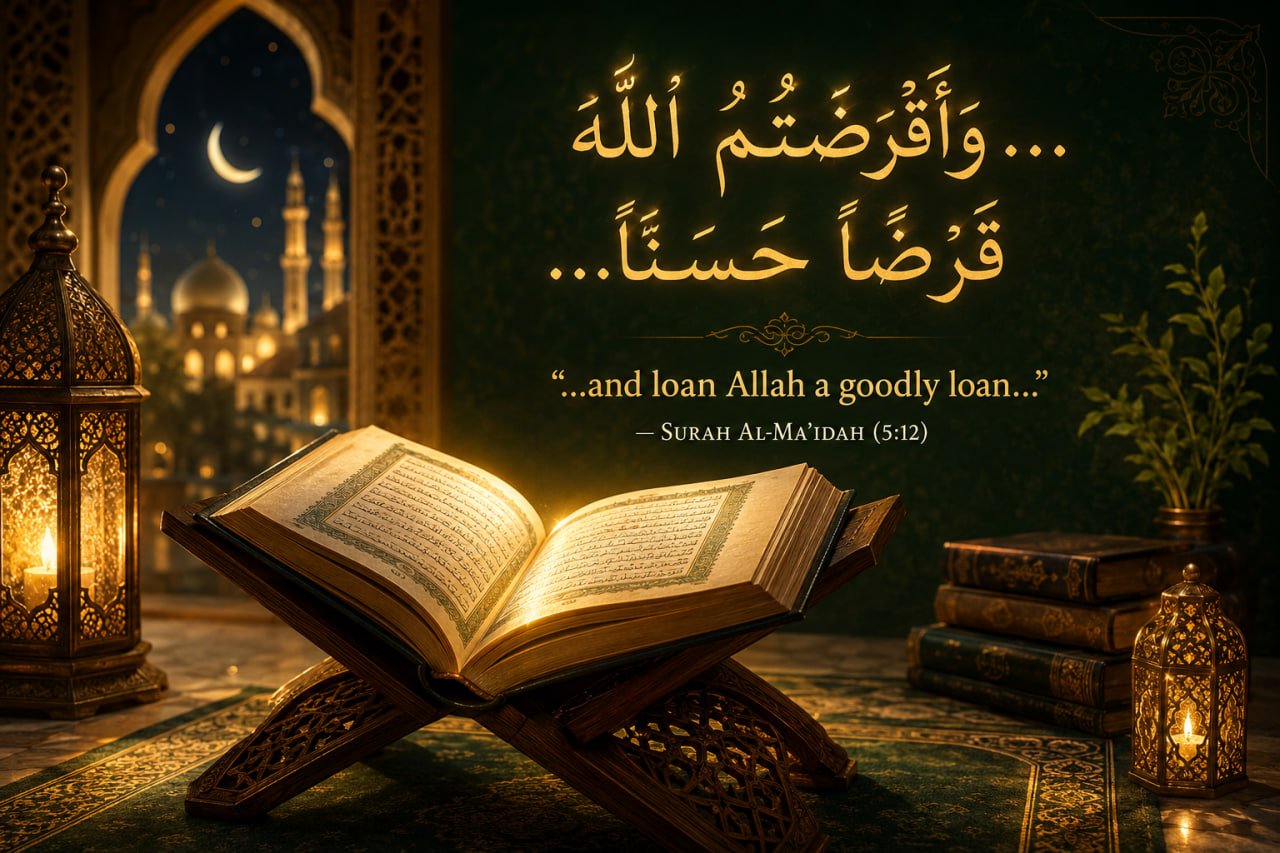
My beloved brothers and sisters, let us take a beautiful, heartfelt journey back into the words of our Creator[cite: 1]. Have you ever paused to think about the deep connection between the verses of the Qur’an? Look at how beautifully organized they are[cite: 1]! In Surah Al-Ma’idah, verse 7, Allah the Almighty gently reminds us[cite: 1]: “And remember the favor of Allah upon you and His covenant with which He bound you…” [cite: 1] Right after reminding us as Muslims about our own sacred covenant, Allah immediately transitions in verse 12 to speak about the covenant taken from the nations before us[cite: 1]: “And Allah had already taken a covenant from the Children of Israel, and We delegated from among them twelve leaders.” [cite: 1]
Now, what exactly was this covenant? Allah explains that it requires establishing prayer, paying charity, and supporting His messengers[cite: 1]. But notice the incredibly moving, deeply emotional phrase packed right into the middle of this divine contract[cite: 1]:
SubhanAllah, look at that phrasing[cite: 1, 2]! Even though this message was historically framed around the Children of Israel, if you remove the opening context and read it directly from the middle, it feels exactly as if Allah is speaking straight to your own heart, O Muslim[cite: 1]! It is a universal message meant to shake our souls[cite: 1]. Why does Allah the Almighty describe financial charity as a personal “loan” to Himself, when we all know the money physically goes into the hands of the poor[cite: 1, 2]? Let us explore the magnificent secrets of Arabic eloquence (Balagha) and the spiritual balm this phrasing offers[cite: 2].
1. The Rhetorical Depth & Linguistic Beauty
From a literary and structural perspective, this verse shifts the entire paradigm of human charity through three profound rhetorical choices[cite: 2]:
- The Ultimate Paradox: Allah is Al-Ghani—The Absolutely Self-Sufficient, entirely Free of All Needs[cite: 2]. Humanity, on the other hand, lives in a constant, perpetual state of being Al-Fuqara—entirely needy and dependent on Him[cite: 1, 2]. For the Master of the universe to ask for a “loan” from His own creation—using the very wealth He gave them in the first place—is an act of sublime divine humility and honor[cite: 2].
- The Promise of the “Loan” (Qard): Unlike a standard, stern command to pay up, a loan structurally guarantees absolute repayment[cite: 2]. By choosing this word, Allah beautifully binds Himself to a promise that the giver will be paid back in full, multiplied countless times over in this temporary life and the everlasting hereafter[cite: 1, 2]. It honors you by making you a vital partner in a sacred contract[cite: 2].
- The Standard of being “Goodly” (Hasana): The loan must be pristine[cite: 2]. This means the wealth must be completely pure and lawful (halal), given with a cheerful heart free of internal hesitation, and given solely for the sake of the Creator without seeking anything back from the recipient[cite: 2].
2. Healing and Purifying the Hearts of the Wealthy
My brothers and sisters, human nature can be so fragile[cite: 1, 2]. When a person is blessed with wealth, it is very easy for pride, vanity, or a sense of superiority to creep into the heart when they give to the less fortunate[cite: 1, 2]. They might think they are doing the poor a massive favor[cite: 1, 2].
The Qur’an beautifully shatters this hidden ego[cite: 2]. The wealthy individual realizes, “Wait a minute, I am not doing this poor person a favor at all. I am simply carrying out a direct transaction with my Lord.”[cite: 2] This instills an immediate sense of deep humility (Khushu’) and completely uproots arrogance[cite: 2].
Securing the Divine Investment
Naturally, human beings love their money and possess an innate, paralyzing fear of losing it or falling into poverty[cite: 2]. By describing charity as a loan to Allah, our anxieties are completely pacified[cite: 2]. We realize that our capital is never truly lost or diminished[cite: 2]; rather, it is safely deposited with the most trustworthy, appreciative, and infinitely rich Guardian, who loves to multiply investments[cite: 2].
3. Preserving the Dignity and Honor of the Poor
Think about the other side of this transaction—the poor[cite: 1, 2]. In many societies, receiving charity can bring an incredibly heavy emotional burden of shame, humiliation, and vulnerability[cite: 1, 2]. But look at how beautifully Allah protects their dignity (Izzah)[cite: 2]!
By elevating charity into a divine framework, the poor person is no longer viewed as a “beggar” receiving a pitying handout from a superior class[cite: 2]. Instead, they are elevated to become the sacred means through which the wealthy person fulfills their contract with Allah[cite: 1, 2]. The poor can receive their sustenance with their heads held high[cite: 2], knowing that the Creator loves them so much that He rhetorically placed Himself in their position[cite: 2].
This completely purges the community of societal malice (Hiqd), jealousy, and resentment[cite: 1, 2]. It bridges the gap between the rich and the poor, ensuring the financial balloon of society does not burst from economic oppression[cite: 1]. It builds a community rooted in love, empathy, and genuine care[cite: 1, 2].
To further cultivate this affection and bridge any divide within our communities, our beloved Prophet ﷺ beautifully advised us as recorded on Sunnah.com:
“Give gifts to one another, and you will love one another.” — Al-Adab Al-Mufrad (Sunnah.com)[cite: 1]
Think about it in purely human terms[cite: 2]. If an earthly king were to approach a poor peasant and ask for a mere piece of bread as a temporary “loan,”[cite: 2] the peasant would surrender it with absolute joy and excitement[cite: 2]. Why? Because he knows that a king’s repayment will not be a simple piece of bread—it will be a magnificent palace[cite: 2]! Now imagine the repayment of the King of Kings, the Owner of the universe[cite: 2]! Allah’s ultimate return on your loan is eternal peace, protection from the fire, and a permanent home in Paradise[cite: 1, 2]. It transforms a simple, temporary material transaction into an unbreakable, eternal spiritual bond[cite: 2].